Friday, May 25, 2012

The Leavenworth Case, by Anna Katharine Green

Original Publication Date:  1878

Genre:  Mystery, Romance?

Topics:  Murder, Fainting, Family Drama

Review:  The Victorians were nothing if not really, really dramatic.  Anna Katharine Green was no exception and her mystery novel, The Leavenworth Case, proves it.  There is Fainting.  There is Swearing Before God.  There are Secret Marriages.  Wild Accusations.  Love at First Sight.  And, of course, 11th Hour Revelations.  A Full Confession.  All those things and many more, and all deserving of mid-sentence capitalization.  And all shared with much more wordiness than necessary.

I must admit that the more I read Victorian literature that was popular with the Victorians, the more I judge them (Yes.  All of them).  They seem, on the whole, a very bizarre bunch prone to monologues and lectures and excessive use of italics and exclamation points.  I find it hard to believe there were many sensible people around in the time period, especially as they all seem to conveniently put their every dastardly thought into writing to be found by someone later on at a key moment.

The Leavenworth Case was not my cup of tea.  It centers around a locked-room murder of a very wealthy man whose name, unsurprisingly, was Leavenworth.  Mr. Leavenworth had two nieces, one of whom would inherit all his money and the other of whom wasn't going to get anything.  There was no real reason for this at all- both nieces were very pretty and seemed very attached to their uncle, but he bizarrely only wanted to give his money to one of them.  What follows is a very complicated (might I say convoluted?) mystery involving many people and a whole lot of partially-burnt pieces of paper (really, you'd think one would be more careful) of trying to determine who killed him.

There were multiple narrative voices in this story:  we have the actual narrator who tells the story, but we also have other characters take on the role of narrator to relate their stories and involvement with the crime.  The thing is, I couldn't tell the difference between any of these narrative voices.  They all sounded the same to me, from dialect to sentence construction to anything else that lends distinction, even though people came from different walks of life and even different countries.  So with that caveat, I was even more lost with the other characters.  It took me a very long time to differentiate between Mr. Leavenworth's nieces, for example.

I also thought the story could do with some editing, but then I often feel that most Victorian novels could do with some editing.  I really dislike the last-minute confession from the villain who then proceeds to tell us his version of the story, explaining every single puzzling detail of the story- it is just sloppily done, in my view, and also seems a bit lazy.  There must be a less bludgeoning way to share the information than that, to integrate it more into the story.  There was also a longer-than-necessary explanation of Mr. Leavenworth's very random hatred of Englishmen.  I don't think this odd characteristic added much at all to the story, and could easily have been tweaked to be taken out without any harm done and at least a few pages removed.  The multiple conversations about and mullings over the exact same clues could have been reduced, too.

I am saying all the bad things, but I do see how this book was engaging to its readers.  The mystery is very complicated and seems to go in many different directions.  Just when you think you've gotten to the end, some other twist comes up.  The detective in the story, Mr. Ebenezer Gryce (was Ebenezer just a really popular name in the Victorian era?!  I don't get it), was also a funny and endearing guy- the only character, really, who stood out to me as an individual.  While I don't think I'll be reading any more of Green's novels, this one was a lesson in patience, and if you are one of those who truly does enjoy Victorian sensibilities and dramatics, then maybe you should give one a go.

Cross-Posted from BookLust

Wednesday, May 23, 2012

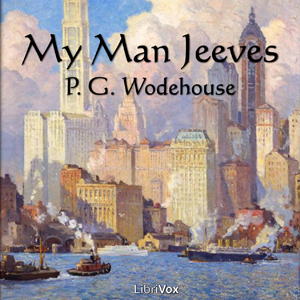
Review: MY MAN JEEVES by PG Wodehouse

book cover
Original Publication Date: 1919

Genre: humor

Topics: class, coming of age


Review:

Bertie Wooster is a lovable, wealthy young man who is totally delusional. He wouldn't be able to solve any problem if he didn't have his imaginary friend to help him out in form of Jeeves, a factotum. Basically, Jeeves is like SIRI before there were cell phones. Whenever Bertie or one of his friends is in trouble, they ask "Jeeves," who appears out of nowhere in front of Bertie and tells him and his friend how to solve their problem.

Okay, so maybe Bertie isn't delusional. OR IS HE? You don't know. My Man Jeeves is a collection of short stories in which Bertie runs into a lot of mishaps, mostly involving women, and the djinni-esque Jeeves suggests ways for him to get out it, mostly involving lying. Over half of the stories, however, have a fellow (I have adopted the nomenclature) named Reggie as the protagonist. I'm guessing this is Jeeves before he became Jeeves--otherwise, why have the stories in a book titled My Man Jeeves? These were actually more interesting than Bertie's stories, because Reggie REALLY gets himself into some scrapes.

These stories were soooo much fun. I listened to the audiobook from Librivox (read by Mark Nelson, who did a really excellent job) and giggle-snorted through every single one--which is not comfortable when you're trying to hold a yoga position, fyi.

I classify these stories as coming-of-age because nearly every one involves a member of the older generation--dad, aunt, etc.--standing between a younger person and what they want. In one, a poet wants to hang out in the country and watch bugs all day, but his aunt threatens to cut him out of her will unless he lives in NYC and tells her about the all parties he goes to. In another, a young artist feels stifled by the presence of his father's masterpiece in his house, so his wife arranges to have it stolen. Mainly these situations are played for comedic effect, but there's a definite sense that the characters are only just beginning to figure out who they are and what they want.

If you haven't read these stories yet, you should. They are super-funny and -entertaining. And as a bonus, suddenly everything on the internet makes sense.

Other reviews of My Man Jeeves at PGP: Patty from A Tale of Three Cities
Read My Man Jeeves on Project Gutenberg


Tuesday, May 22, 2012

The Fortieth Door by Mary Hastings Bradley

book cover
Original Publication Date: 1920

Genre: Adventure

Topics: Forbidden love, hidden identities, marriage customs, Egyptian folklore, harem life


Review:
Jack Ryder is an American archaeologist working in Egypt. He’s been persuaded by his friend Jinny to escort her to a costumed ball in Cairo. Jack is reluctant. He has no interest in balls or even women, to the point he nearly thinks girls=cooties. Jinny isn’t one to listen to excuses though, so he borrows his friend Andrew MacLean’s kilt and attends as a highlander. During the ball, he sulks around the outer fringes until his attention is caught by a mysterious girl in black veils. And she’s something else, all dark eyed loveliness and tiny enough to put in his pocket. He spins her around the dance floor a few times. Maybe girls aren’t so yucky after all.

Suddenly she dashes off but Jack is in pursuit. He follows the girl to the gates of a walled house, where he enfolds her in his arms. But wait, this is no costumed party goer! She’s Aimee, the daughter of a prosperous Muslim merchant. She’s not for you, Jack dear. Jack thinks otherwise and persuades her to see him again. Jack doesn’t know it yet but he’s about to get himself in way over his head.

I had my moments with The Fortieth Door. I wanted to see where this was all headed. I knew they’d get together, but how was this going to be accomplished? Very complicatedly. First of all, there are a lot of coincidences in this book. A LOT. I mean, come on. I wasn’t even surprised by anything after awhile. Some of it doesn’t make much sense either (that ending with the mummy? What?!) So prepare to leave your disbelief at the door.

The Fortieth Door was published in 1920 and was made into a silent film in 1924. I can see why, there is plenty of action. When there’s no action though, there’s little to say about the writing. Was Mary Hastings Bradley the Dan Brown of her time? Possibly. Bradley was a well traveled lady and had been to Egypt, which is obvious in her descriptions and some of the cultural references. She certainly chose the right time to write The Fortieth Door. In 1922, King Tut’s tomb was discovered and the Egyptian craze began.

The Fortieth Door has all the intolerance and racism you would expect for the time. All the good guys are white guys (Brits and Americans), and all the bad guys are Egyptian. Pretty much every character who wasn’t white was a baddie. It was ridiculous actually. Then there is Jack who was so irritating at times. He’s been in Egypt for 2 years, you’d think he’d have caught on to how things work. He gets angry with Aimee when she must do what her father tells her to do. Like she’s got much of a choice. Most of the time I liked Aimee. She does some brave stuff. She’s courageous and quick on her feet. It made it even more frustrating to me when Jack refers to her as a little girl or a child. Dude, did you not just see what she did there? She’s a tough cookie!

Jinny and Andrew were my favorite characters by far. Both see Jack as the reckless youth he is. They actually give Jack’s actions some perspective for the reader. Jack can be immature and thoughtless and it’s not just us who knows it. I liked how Andrew was trying to hide things from poor innocent Jinny (as he thought her), while she saw right through him and knew Jack was in deep do-do. The female characters remain strong, even though the men think they can’t handle all this danger. 

The Fortieth Door is fun despite its problems. It’s full of action and adventure. It’s dated, yes, but if you can keep your eyes from rolling out of your head, it’s enjoyable. I’d love to see that film, but it’s considered lost. Maybe someone can remake it since remakes are all the rage now, maybe Ron Howard could direct.

This review is of the LibriVox recording narrated by JM Smallheer. She puts some life in the text and does a good job with the accents. Her pronunciation is also excellent.

Monday, May 21, 2012

Review: The Log Cabin Lady by Anonymous

Original Publication Date:  1922

Genre:  Non-Fiction, Women, Wild West

Topics:  Women, Class System, America, World Wars

Review:  This is a true life account of one woman's difficult transition from frontier girl to society girl.  It really appealed to me because we so often hear about Cinderella stories- beautiful poor, young girls swept off their feet by handsome rich men and go off to live happily ever after in a castle.  And that may be true to an extent, but it ignores the very real difficulties those women faced in needing to learn all of the etiquette, rules and complex interactions that regulated life in high society.  This is the only book that I've encountered that really approaches this issue in an honest and sympathetic way.  Nowadays, most historical romance novels are written with heroines that roll their eyes at convention and are bored by learning how to properly address a Duke and don't care to know how many times one should curtsey in front of the Queen of England.  But those heroines ignore the very real consequences that arise when a person doesn't behave correctly.  This anonymous writer is well aware of those consequences. 

I am not entirely sure why she wrote this short book in the manner that she did.  For example, she doesn't set down all the rules for young girls to follow.  She doesn't give them advice on what to do in certain situations.  She just relates her own early bloopers and then pleads with her readers to teach women how to behave properly in Society.  It's a strange thing to do, I feel, because her writing doesn't actually help any girls that may be in the same situation as her.  She just wants other people to help them.

Because of this, I think The Log Cabin Lady is very dated.  It would be an interesting and useful read if it actually gave specific directions.  I think I would be pretty fascinated to learn exactly what a woman should wear in her presentation to the Queen of England, what topics are appropriate for dinnertime conversation, how you should seat people at dinner, etc.  But none of that is touched upon here, except very peripherally, when our narrator makes a blunder.

So instead, this journal is more a group of vignettes written with the weirdly desperate hope of giving girls etiquette training at home while they're young so that they won't embarrass themselves overseas by doing something as ghastly as asking a general to sit down in the presence of a standing king. 
If any one had told that girl the sacredness of the convention she had ignored, she would have suffered as keenly as I had suffered in my youth. It was such a simple thing to learn; yet who in the middle of a war would think of stopping to run a class in etiquette? The point is that any girl capable of crossing half the world to do a big job and a hard one in a foreign land should have been given the opportunity to learn the rules of social intercourse.
I personally would turn that statement around on its head and say, "Why, in the middle of a war, are you so worried about a girl requesting a general to sit down in a king's presence?"  But perhaps I am not the target audience.

The Log Cabin Lady also gets strangely patriotic- not about America as a whole, but about the Midwest.  As a born and bred Midwesterner, I completely sympathize with her, but it is bizarre because the woman keeps talking about how Americans need to cultivate good manners so that we can impress Europeans, but then on the other hand, she really prides Americans are being down-to-earth and not caring about such things.
It was like a bath for my soul. Brains count out West. Anybody who tries to show off is snubbed.
You must do something to be anything in the Middle West; just to have something doesn't count. You don't list your ancestors as you must in Virginia or the Carolinas, but to feel self-respecting you must do something.
So really... not sure what the Log Cabin Lady wants.  Refined European manners that will make even the most awkward Illinois girl feel comfortable in drawing rooms around the world?  Or good old American honesty and integrity, where class and ancestry don't matter nearly so much as the work you do yourself?  It seemed to me like she wanted both, and her narrative was very winding and misguided because of it.

Also, her rich and handsome diplomat husband seemed like a first-class jerk to me, so I am not sure I trust her taste in all things, anyway.
 

Sunday, May 20, 2012

Review: THE LOST STRADIVARIUS by John Meade Falkner

lost Stradivarius book cover
Original Publication Date: 1895

Genre: Gothic, epistolary

Topics: ghosts, evil, temptation

Proposed alternate title: The Devil Went Down to Oxford


Review:

John Maltravers is a respectable student at Oxford, until one day he and his V E R Y close friend, Mr. Gaskell, decide to play a Gagliarda, whatever that is. The melody calls up the ghost of a man who is mad, bad, and dangerous to know, and who just happened to have occupied John's rooms a century ago. When the ghost passes on his Stradivarius violin, John sells his soul to the devil to become the greatest fiddle player in all the land, and is soon ignoring his fiancee, familial responsibilities, growing out his hair, acting like a dick rock star, traipsing off to Naples at the drop of a hat, smoking the pot, and spending way too much quality time with nubile Italian boys.

The only reason I downloaded The Lost Stradivarius from Librivox was because a good portion of it is narrated by my man Ralph Snelson, whom I am stalking (only on Librivox, though, don't worry). As always, he does an excellent job. There was one chapter where I started crying because he conveyed the emotions of the narrator so well.

The story itself is narrated, not by Maltravers, but by his sister Sophia, in a letter to his son. Overall I thought John Meade Falkner did a really good job both in choosing Sophia as the narrator and fleshing out her character believably (even though I did have to wonder how she knew so many details about what went on in her brother's life when he was away from home). We need her to be the narrator because Maltravers becomes increasingly unsympathetic as the book goes on, and the story she tells is a thinly veiled metaphor about how she lost her brother to addiction. That's why I don't think of this as a "ghost story"--the ghost in question really has only a minimal amount to do with the central narrative. When Maltravers moves to Italy, the book takes on an unexpectedly Gothic flavor, with abandoned castles, skeletons, and murders mysterious.

maltravers and his Stradivarius
SO WHAT, I'm still a rock star, I got my rock moves, and I don't neeeed youuuuu!

I was actually thinking The Lost Stradivarius was pretty good until the final chapter, which is an addendum by Mr. Gaskell, the "very intimate" university friend of Maltravers. There was some ethnocentrism, and paranoia about the undue influence of pagan (read: classical, read: homosexual) Italian culture on Our Susceptible Young People earlier in the book; but in Gaskell's note it was so over-the-top that I was literally LOLing. Falkner also added a bunch of extraneous plot elements in the final chapter, I have no idea why. Am I supposed to care about the ghost's murder and missing pages from his diary? BECAUSE I DON'T.

Still, even though I found the last chapter ridiculous and annoying, it's very zeitgeist-y in that it reflects the Symbolists' concern with art and beauty and overindulgence. I just wish it had been more subtle and not so much with the xenophobia.

The Lost Stradivarius is an interesting mixture of ghost story, Symbolist writing, and Gothic novel, and for the most part it works. I think it would be a great read around Halloween or for the RIP Challenge.


Find The Lost Stradivarius by John Meade Falkner on Project Gutenberg|Librivox|Gaslight

Saturday, May 19, 2012

Review: The Misses Mallett by E. H. Young

The Misses Mallett - E.H. Young
Original Publication Date: 1922 (Under the title "The Bridge Dividing")

Genre: Fiction, Woman's History, Romance

Topics: Spinsterhood, Single Women, Love, Relationships


Review: I picked up The Misses Mallett (also published under the title The Bridge Dividing) on a whim. I came across the title on a list of "similar reads" while browsing through GoodReads and I could not believe my luck that here was a Virago Modern Classics title available in the public domain. On top of that, the plot promised to revolve around single women, a topic that I love to read about in early twentieth century fiction.

The Misses Mallett is about four single women who live together, all of them keeping to the idea that being single and an inability to commit is a family tradition. The four women consist of three sisters: Caroline, Sophia, and Rose, and the unfortunate child of the sisters' brother who left his wife and child in poverty. The child, Henrietta, moves in with the three sisters when her mother dies. She finds herself in a household that is very different from her previous surroundings; the sisters are reasonably well off and often spend time contemplating which dresses to wear on any of their social calls, while Henrietta is used to helping her landlady in order to keep her mother and herself in reasonable conditions. Henrietta struggles with a balance of the qualities she valued in her mother and her previous life, while she also learns to recognise the similarities to her father (who was known as a little bit of a rascal and had a number of affairs) during her stay with her aunts. 

The story focuses on Rose and Henrietta, while Caroline and Sophia remain more marginal figures. What we do learn is that Caroline likes to reminisce and talk about her past conquests and improprieties, which may not necessarily all be true. Sophia mostly lives in the shadow of Caroline, but every so often comes out to correct Caroline’s stories, especially when she feels they exaggerate her past lack of decorum, or the number of her conquest. Through these commentaries we learn that Sophia might be happy living in Caroline’s shadow in public, but that she privately knows that she received as much male attention as Caroline in her day.

Caroline functions as the matron of the family, and she is sure to remind her family of their upholding the family’s standard, which, rather comically, involves the rule that the Mallett women prosper in spinsterhood:

“The Malletts don't marry, Henrietta. Look at us, as happy as the day is long, with all the fun and none of the trouble. We've been terrible flirts, Sophia and I. Rose is different, but at least she hasn't married. The three Miss Malletts of Nelson Lodge! Now there are four of us, and you must keep up our reputation.”

Exactly because these books seemed to subvert the social expectations regarding women and marriage, by having spinsterhood be proclaimed an ideal, while marriage was professed to consist of trouble, this book had me interested. Of course, through some of Caroline’s silliness, and the emerging storyline of the longing for love felt by most of the Malletts, society’s ideal is eventually upheld. Nevertheless, the slightly mocking tone made me settle down for an enjoyable read during the first quarter of The Misses Mallett.

I am sorry to say that these expectations did not pay off. Perhaps this has to do with the fact that the main storyline soon starts to revolve around Henrietta and Rose. Both Malletts compete for the love of Francis Sales, who is married to an invalid woman who terrorises her husband and the Mallett girls because of suspected infidelity on their part. 

The thing is, while I could sympathise with Rose and Henrietta in their singleness, and while they were somewhat interesting in their contemplations on life separate from Francis Sales, it was their professed love for him, and their obsession with winning his affection, that got tiring very quickly. The only thing that seemed a likely explanation for the way Rose and Henrietta chased him, was that he was, in effect, unavailable. It appears to be the chase that made him desirable, not the person himself. And who could blame the girls for that, because if anyone seems undeserving of their love, it is Francis Sales. I grew tired of his self-pity and “woe is me” quite quickly, and I couldn’t really understand why the Mallett girls persevered in convincing themselves they loved him.

Contrasting Francis Sales with the single man Charles, it is rather obvious to the reader who Henrietta *should* choose. Of course, it takes Henrietta ages to acknowledge this. Charles is one of the more interesting characters in the book (next to Sophia, whom I would have loved to learn more about) in that he is both an astute observationist, but also a dreamy philosopher with a love for music, mixed with a dash of a heroic lover. He might have been a little bit too much of a Romantic for me, but he was certainly the more interesting male lead. The fact that it took Henrietta so long to recognise this made the book feel extra long in the end. I really wish I could have woken the girl up and directed her to him at some point in the narrative. Because, as much as I enjoy the Austenesque setup of a “Mr Wickham” and a “Mr Darcy” (though Francis and Charles really do not compare to these gentleman except for one being the “wrong” and the other being the “right” choice for the girl), somehow E.H. Young’s story did not have the same magic.

Luckily, Simon pointed out that The Misses Mallett is one of the least strong works by Emily Hilda Young that he has read. He recommends her later works William and Miss Mole instead. Unfortunately, these titles are not (yet?) available in the public domain. Her earlier novel Moor Fires is, but what I gather from Simon’s statement that The Misses Mallett is considered to be the novel that connects her mediocre rural novels to her later novels of much higher quality, I am not sure if I should bother to try her earlier books.

The Misses Mallett had some promising aspects and themes going, especially during the first quarter of the novel, but I feel it died down quickly in the rather long parts dedicated to Rose and Henrietta chasing the, in essence unlikeable, Mr. Sales.

The Misses Mallett can be found on The Project Gutenberg here.

Friday, May 18, 2012

Review: THE TRAIL OF CONFLICT by Emilie Loring

the trail of conflict book cover
This is the most accurate cover I have ever seen. The characters really are that wooden.
Original Publication Date: 1922

Genre: Romance

Topics: masculinity, love, independence


Review:

Mr. Glamorgan has a dream: to make so much money he can buy his daughters upper-class husbands. To that end, he buys Peter CourtlandT's mortgage and then threatens to foreclose on him if his son, Stephen, doesn't marry Glamorgan's daughter, Geraldine. You can tell the CourtlandTs are fancy because they have a T at the end of their name that makes no linguistic sense. Anyway, Stephen and Jerry marry, but Stephen's not very happy about it, and they don't have *whispers* THE SEX. Then Stephen's Uncle Nick shows up--a hilarious grizzled old guy with a talent for saying the most awkward thing at any given moment and not giving the tiny twitch of a rat's ass. Nick decides that what this couple needs is to eschew all of Glamorgan's money and move out to Wyoming where Stephen can prove he's a man, man (you would have thought being a hero in WWI would have done it, but nope!). So they do. Things happen, they fall in love, blah blah.

I've read more than a few Emilie Loring novels; my mom has a whole stack of them that I would make my way through on summer vacations. The vast majority are not in the public domain (not as far as I know, anyway), and I can see why no one bothered to renew the copyright on The Trail of Conflict. It's not one of her best. The writing is extremely uneven--pretty good one minute, then a lot of tell-not-show the next; narrative inconsistencies (when the novel starts, it's implied the story takes place in England, then suddenly they're in the US); and the plot is way more complicated than it needs to be. That paragraph only describes the set-up for the entire novel; the vast majority of it takes place in Wyoming. And there's even more plot once they move.

But I wouldn't have minded any of this if I had been able to connect to either Jerry or Stephen. Instead, I spent most of the book wondering what the heck was going through their heads. There's too much plot and not enough characterization, and both the main characters just seem to do stuff with no insight into why they are doing it. Is Stephen ever attracted to Jerry? I don't know! I guess it doesn't matter, since they're married anyway. And what glimpses I did get of their train of thought didn't exactly endear me to them. For example, Jerry gets rid of all her money on the way to Wyoming, then is like, "How am I going to survive without money?" Sweetie, you're moving to the home of a millionaire rancher. You're not going to starve. And where are you going to go shopping in the middle of Wyoming, anyway? Stephen, meanwhile was a total dick and kept calling Jerry "little girl." Guys pro-tip: NEVER CALL A WOMAN THAT.

I wanted to like Trail of Conflict, I really did, but I just couldn't spend another moment with the main characters. Loring has plenty of other books that are worth reading (I really like Here Comes the Sun), but none of them are in the public domain. So there you have it.


Find The Trail of Conflict at Project Gutenberg