Showing posts with label fiction. Show all posts

Wednesday, September 9, 2015

Northanger Abbey

Original Publication Date: 1817
Genre: Novel
Topics: Gothic Parody, Romance
Review by : Becca Lostinbooks
Download Northanger Abbey by Jane Austen at Project Gutenberg|Librivox|


The Characters


John is egotistical, presumptuous, vindictive, and boring as watching paint dry.  To top it off he is as oblivious to Catherine's indifference as Catherine is to Isabella's own egocentricities.

Catherine is young, innocent, shy, and naive and dense to a fault, but kind-hearted.  She has a huge imagination, which Austen uses to tell the story.

Henry is gentlemanly, humorous, and kind.  Quite the charming flirt, as well.  And he understands muslin "ever so well", which is apparently "much to his credit, I'm sure." Okaaaay.

Isabella, in contrast, is an overt flirt, as well as vain, disloyal, and an opportunist.
 
The Setting
Catherine was involved in the same Regency world full of dances and proper socializing that is in every Austen novel.  The abbey was the interesting part, as were Catherine's imaginative scenarios.  The problem, for me, is that while the book makes fun of gothic novels, as this is a parody of the genre, there is hardly enough time in the gothic Abbey for Catherine to truly get creeped out and twist logic as much as she does.

The Plot
I like that Austen did something different with this novel, but I am not sure I enjoyed it as much as I was hoping.  I did not care for the characters much and I think that took away from some of the enjoyment of it.  Catherine was sweet, but soo annoying.  I did hope for the very obvious ending, but unlike Austen's other novels, I did not enjoy so much the journey to get there.  I think it would've been much more satisfying if I cared much about Catherine.
I did like the time Austen spent on whether people should read novels, on the debate of a good imagination, and the importance of the heart over wealth.

Have you read Northanger Abbey?  What were your thoughts on it?

Wednesday, June 24, 2015

Review: The Ladies' Paradise (Au bonheur des dames) by Emile Zola

the ladies paradise Original Publication Date: 1883

Genre: Literature/fiction, romance-ish

Topics: Business, modernity, women, consumerism            


Review by heidenkind:

Forced to leave her childhood home in Normandy, orphan Denise Baudu arrives in Paris with her two younger brothers, looking for work in the shop of her uncle. Unfortunately, her uncle is less than welcoming–ever since The Ladies' Paradise opened across the street, he's struggled to keep business going, and the last thing he needs is more mouths to feed. With no other option to make a living, Denise gets a job at The Ladies' Paradise and experiences the not-exactly-cheerful life a 19th century clerk. Meanwhile, The Ladies' Paradise continues to expand, threatening the established shopkeepers on the Rue de la Michodière.

It's well-known Zola based The Ladies' Paradise on Paris' real-life first department stores, the Bon Marché and the Louvre shops, and if you think retail has changed a lot in the last 132 years, all you have to do is read this book to realize you're completely wrong. The Ladies' Paradise could just as easily be Amazon.com, and its owner Octave Mouret a more dashing and romantic Jeff Bezos. All the modern rules of retail apply: selling at no profit or even a loss just to get people in the door; spreading related departments out so customers have to walk through the whole store to get the items they came in to shop for; accepting returns even when the item is obviously used; the customer is always right; advertizing everywhere; sales treated like events; customers buying stuff just because it's cheap; and the drive to grow bigger and crush the competition even when it's not necessary or practical to do so.

And if you've ever had a job in retail, you'll surely sympathize with Denise's work-related woes: the physical labor involved in walking around the store, helping customers and stocking items; the annoyance of spending a bunch of time helping a customer only to have them walk away without buying anything–indeed, you get the feeling they didn't intend on buying anything, they just wanted someone to wait on them–the social hierarchy of a store, the cliques, the lack of job security and the fear of being fired; the way female employees are treated.

i love my job face


Zola does an excellent job of painting a picture of a modern department store. Each chapter is themed around capturing different aspects of the store or the employees' lives. For example, one of my favorite chapters was Chapter Six, wherein Denise is fired for visiting with her worthless brother while at work. But before that happens, the employees grab lunch in the cafeteria, and I swear to god it sounded exactly like high school. Horrible, mass-produced food is served in staggered lunches, and the employees spend all their time bemoaning their meal while talking about what they'd rather be eating. Not to mention the social minefield of the lunch tables.

What I'm saying here is that Zola, no surprise, really knew his stuff. He knew how these new department stores, symbols of modernity, worked from the lowest stocker up to the management and owner, and he knew what the lives of their employees was like. The Ladies' Paradise isn't just a setting in this novel, it's the main character and an unstoppable force, rendered with almost microscopic attention to detail.

Unfortunately, all the characters in The Ladies Paradise who are, you know, actual characters and not department stores, are not developed very well at all. That especially includes the main character, Denise. She has no personality, no motivation, and she's basically just a plot element to give the reader a believable entree into The Ladies' Paradise. Her two personality features are that she's kind and innocent, of the unbelievably stupid variety. If this was a Colette novel, Denise would have hooked up with one of her numerous admirers in chapter two and let him buy things for her so that she could eat and stuff. But unfortunately The Ladies' Paradise is not a Colette novel.

Some things that simply do not make sense about Denise:

  • Why doesn't she hook up with Henri Deloche? She likes him, they're adorkable together, he's devoted to her, defends her honor, and wants to marry her. Yet she refuses. NO EXPLANATION GIVEN. Literally, she's just like, "Hey, I can't explain it! I feel really bad about my inability to provide even the barest minimum of a reason, though, does that help?"
  • Why does Denise continue to be so nice to her uncle WHO BASICALLY THREW HER OUT IN THE STREET after writing her inviting her to come work in his shop? I'd be like, "Va te faire enculer, I hope TLP crushes you!"
  • However, given that she *does* inexplicably still treat him like a beloved family member, and that the other traditional shopkeepers like Bourras and Robineau were kind to her and took her in when Mouret and TLP unceremoniously tossed her out on her ass after making her life miserable for months and months, how can she justify her loyalty to The Ladies' Paradise? "She was secretly for the big shops." Really? I can see accepting that the big shops are going to win in the end, but you're actually rooting for them? Makes no sense WHAT.SO.EVER. Unless you're, like, a terrible person.
  • In Chapter 8, Mouret convinces Denise to return to TLP, and the other employees' attitude toward her undergoes a complete one-eighty. Suddenly they all accept and respect her. Again, no explanation given.


Don't even get me started on the whole affair between Denise and Mouret. After she returns and everyone falls in love with her because she's sweet, innocent, etc., Mouret makes it clear he like-likes her and invites her to his rooms after work for "dinner." Denise is confused until someone explains to her using small words that Mouret wants to make her his mistress. She gets all upset that he would want to sleep with her without marrying her and stands him up. Okay, fine. Stick to your guns, girl.

But then... at the very end of the book, Denise is planning to leave TLP and return to her home in Normandy, which gives Mouret all the sad faces, and her friend Pauline is like, "How cruel you are, to make him suffer so! ...Do you detest him?" Which is when Denise admits, with a tortured aspect, that she doesn't detest Mouret–actually, she really truly loves him.

Pauline is like (I'm summarizing here), "Why didn't you sleep with him then? Oh, it's because you were trying to trap him into marrying you, obviously."

Denise: "Marry me! Oh! no! Oh! I assure you that I have never wished for anything of the kind! No, never has such an idea entered my head; and you know what a horror I have of all falsehood!"

really??


Really, Denise? I mean, you initially refused to sleep with him because he didn't propose, but the thought of marriage never entered your head and you're totally not holding out now just because you want him to marry you, really? Why do you keep refusing to sleep with him, then?

Say it with me: NO EXPLANATION GIVEN.

Anyway, The Ladies' Paradise is an okay book. I think it's worth reading, it just doesn't have an actual plot or any character development to speak of. For a "realistic novel," it was pretty hard to buy into the characters' actions. Not one of Zola's better books, in my opinion.


Download The Ladies' Paradise by Emile Zola at Project Gutenberg [French–This is another annoyance, why isn't the English version on PG and Librivox?]|Project Gutenberg Australia [English]|Internet Archive [English]


And, for your enjoyment...

Monday, April 15, 2013

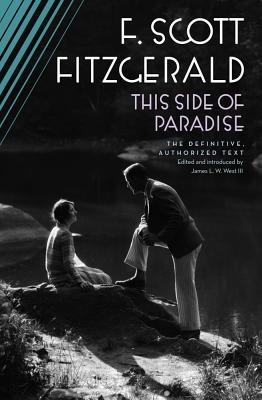
Review: THIS SIDE OF PARADISE by F. Scott Fitzgerald

Original Publication Date: 1920

Genre: fictional autobiography

Topics: coming of age, status, personal quest

Review by : Patty @ A Tale of Three Cities


Having read The Great Gatsby and fallen in love with Fitzgerlad's story-telling, I couldn't help but wonder whether this was a one-off experience.  
I was so mesmerised by the techniques he used, that I wanted to have more of it - and so chose to read This side of Paradise, Fitzgerald's first novel, semi-autobiographical, and the book that shot him to fame.  

Would I distinguish his brilliance already there? Would I feel the "lost generation" he so eloquently spoke about?
Fitzgerald was in his early 20s when his wrote this book, and used elements from his personal experience to draw the character of Amory Blaine: a well-off, spoilt-rotten mama's boy who grows into a sad, lonely young man, never meant to find happiness...


Having first read the Great Gatsby inevitably puts this book in a stricter, harsher light.  The writer is not yet master of his skill, so the book reads really like a very, very long description - a diary of the main character and everything that happens around him.  This is very analytical and, as it also happens to be autobiographical of Fitzgerald, it was interesting to witness first-hand his character - or lack thereof.

Because Amory is not someone who will have to strive to get ahead in life:  he's from a well-off family, with a father semi-absent and a mother who's just enjoying her personal crises.  I could sense the boredom oozing from every corner of the book and I felt really lucky I did not have such an upbringing:  Blaine cannot escape his destiny.  He's handsome, intelligent and lazy in terms of actually doing something:

"Amory wondered how people could fail to notice that he was a boy marked for glory, and when faces of the throng turned toward him and ambiguous eyes stared into his, he assumed the most romantic of expressions and walked on the air cushions that lie on the asphalts of fourteen"
I was almost ready to dismiss Amory, because I was slightly getting tired about all his "adventures" in prep school.  I could understand his quest to fit in with all the other members of high society, but I was losing interest - fast.  The drama boy was growing into a drama young man:

"I want to be admired"

But, as life proves over and over again, Amory will have to face difficulties in his life - he will eventually lose his great love to money (which, in the meantime, his family has lost), he will fail to find success in work, he will even try to "advocate" Socialism in the hope to profit from an eventual revolution.  Slowly, however, he will realise what his true self is. He's lost everything that would matter in an earlier stage - status, love, money - but now he's come to terms with what really is of essence.  

The book ends with an enigmatic claim Amory makes:  he now knows himself 
"but that is all --"
The dash at the end of that sentence, and not a full stop, is really what marks for me the turning point for Amory.  He's hit bottom, he has accepted his true self, he can no longer hide - and he's now ready to move on...

I would not say I enjoyed This Side of Paradise as much as The Great Gatsby.  While it's not a bad book, I found the inexperience of the pen failed to attract my attention. It is nevertheless a sincere portrayal of Fitzgerald, capturing his youth and his personal quests, and it made me appreciate Gatsby even more...


Download This Side of Paradise by F. Scott Fitzgerald at Project Gutenberg|Librivox|

Friday, March 22, 2013

Review: THE CARD by Arnold Bennett

Original Publication Date: 1910
Genre: Fiction, Humorous
Topics: English, town, social class, gender relations


Review by : Liz Inskip-Paulk (http://ravingreader.wordpress.com/)


Subtitle: A Story of an Adventure in the Five Towns.

This novel has a similar feel to the humor of Jane Austen – class-based, omniscient POV, wicked humor. Denry Machin, the protagonist, aims to be “The Card,” which is (in this context) another name for the man about town and sort of ‘Big Man on Campus” idea despite being a lower class and thus socially challenged...

Starting with his early days as a young student, he found himself to be clever and willing to take advantage of any situations which could help him, and it’s this willingness (and his slightly “flexible” ethical attitude) which moves him up the financial and social ladder of this industrial northern town. He’s not an evil man – just a bit ethically “gray” and very ambitious and quick to grasp the lay of a situation.

Machin, son of washerwoman and currently an apprentice clerk for a small local business, illicitly adds his name to the invitation list of guests to the upcoming ball of the new mayoress. This signals just the beginning of his climb up the local social ladder, and Bennett describes him thus:

“The thrill of being magnificent seized him, and he was drenched in a vast desire to be truly magnificent himself. He dreamt of magnificence and boot-brushes kept sticking out of this dream like black mud out of snow ..”
And when he is at this big ball, the social event of the season, he stands on an upper level, waiting for the ball to start:

"Then he went downstairs again, idly; gorgeously feigning that he spent six evenings a week in ascending and descending monumental staircases, appropriately clad. He was determined to be as sublime as anyone… There was a stir in the corridor, and the sublimest consented to be excited.”
Denry has high social aims and although not devious, somehow ends up climbing the social ladder through odd means and coincidences. He is exceedingly impulsive trying to impress people (and successfully for the most part). In one situation, Denys offers to buy a house from a local woman from whom he is collecting rents but he has no money to do this. By doing so, he puts himself into a financial crisis, and immediately knows that he has got carried away with things, but has no idea how to remove from this situation. However, he couldn’t help himself:

But, as always when he did something crucial, spectacular, and effective, the deed had seemed to be done by a mysterious power within him, over which he had no control”
And yet somehow, it seemed to work out one way or another in Denry’s favor as the plot continues. This is a light-hearted read with little serious social commentary, and it doesn’t try to be anything else. It takes Denry from the modest clerkship of a local businessman to the vaulted expensive hotels of Switzerland in a way that is quite believable and also unpredictable.
 
As the other townspeople say in the novel, “What has Machin done now?” and it’s the same for the reader as you follow Denry’s meteoric rise. However, it’s not without incident and it’s not without mistakes, and yet somehow, Denry ends up landing on his feet.

If you’re after a fun read, then this would be a good fit. It’s quite short, it’s well written, and it’s humorous.   Wiki says that there is a 1952 movie of this book (U.S. title The Promoter) with Petula Clark and Alec Guinness which could be quite fun to compare.


Download The Card by Arnold Bennett at Project Gutenberg|Librivox|

Sunday, March 17, 2013

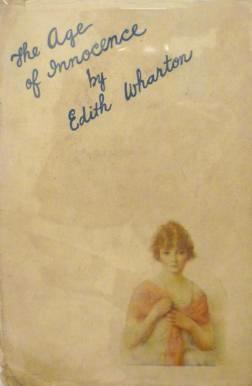
Review: THE AGE OF INNOCENCE by Edith Wharton

book cover Original Publication Date: 1920

Genre: general fiction

Topics: love, society, tragedy


Guest review by Ash (http://bookletsgo.wordpress.com/):

Blogging about certain books can be a challenge at times and I believe this is one of those times. Deemed as one of the best classics in English Literature, The Age of Innocence throws light on the late 1800′s upper-class society in America..particularly the New York society. I came across this book through a lot of sources but one that particularly struck me was a review by Danielle.

The novel opens with an Opera theater where all of the New York’s elite are watching a play. Newland Archer, the hero of this story is looking out for his fiance May Welland when he spots her seated beside her infamous cousin, Countess Ellen Olenski. Rumors are astrife that the Countess is in NY recouping from a disastrous marriage to a Polish Count. Even so, the New York society condemns her decision and shows it quite boldly. At first, Archer takes it upon himself to show his support to May and her family for sheltering the countess but he finds himself in love with Ellen Olenski who also finds herself returning the affections. And then May who is all the while docile and quiet, decides to prepone the wedding, and Archer finds himself married to May Welland. This doesn’t put a dent on Archer's affections until May makes a decision that changes the course of the story. Describing this plot any more wouldn’t do any justice for its a very difficult to blog on this particular title.

Archer is torn choosing between what society approves vs. what his heart desires. Although his first impression of May is that she meets the Society’s standards and his in every way, he gradually realizes that May and many women like her were groomed to be perfect, ignorant of any independent thoughts or opinions. Ellen is a complex character who seems to be a misfit both in NY and in Europe. She struggles the most trying to fit in with the NY society which scorns her every decision pushing her to the brink of moving back to Europe. For me, May was perhaps the most complex of all characters...She is first introduced as a docile well-bred lady and as a reader, you'll be taken in by it all. Watch out though, for she does have some tricks up her sleeve.

Edith Wharton comes from an upper-class family herself and so her insights into New York old society’s rules and customs are well highlighted in every chapter. Whereas Europe has more liberal code of behavior and independence in thought, NY society condemns any semblance of independent thought or action. So long as a man conducts his affairs in secret and silence, he is exempted from the scorn and rejection by the society whereas a woman is literally shunned. This is another point that is brought out by Ms. Wharton. And then there are the usual theatrics associated with the society when people meet at an Opera or a Ball or a dinner. The novel has many other characters painted to life who add spice to the otherwise quiet plot but its best to explore them through the book then through a blog. For those who don’t want to read the book, I recommend the film featuring Winona Ryder and Michelle Pfeiffer.


Download The Age of Innocence by Edith Wharton at Project Gutenberg|Librivox|GirleBooks

Wednesday, December 5, 2012

Review: EIGHT COUSINS by Louisa May Alcott

Original Publication Date: 1875

Genre: Young Adults

Topics: Growing up, Morals, Child-reading, Happiness, Health


Review:

Eight Cousins” is about Rose Campbell, a 13-year-old who shortly after becoming an orphan is put under the guardianship of  her Uncle Alec. He’s a doctor and temporarily away at sea, so until he returns Rose goes to live in “Aunt Hill”, the home of many aunts, great-aunts and seven male cousins. When we first meet her, Rose is treated by the Aunts as the frail and delicate creature every young woman of the should be, but when Uncle Alec comes back, he begins a long process towards a happier and healthier Rose, using very unorthodox methods (he was ready to burn her corset!).


I was already 30 pages in when I realized I’d already read “Eight Cousins”, many, many moons ago. I vividly remember two scenes in particular, but in my mind they became part of ”A Little Princess” (I confused my orphans…): the scene where Uncle Alec creates placebo pills from brown bread, and when he put together Rose’s room, full of exotic objects from his travels. Why these two in particular in a book full of other events? No idea.

The story is pure Alcott in it’s gentleness and focus on strong messages for young people, but it felt rather more outdated than “Little Women” and its sequels. In those more famous works, she seem to be writing for both adults and children, but this one comes across as more infantile. The moralizing and sentimentality in “Eight Cousins” (full of “little dears” that go to “little beds”, with ”little cups of broth”) become too much Tell and not enough Show. Here’s when the kinder of the Aunts tries to dissuade her sons from reading “popular stories”:
”A boot-black mustn’t use good grammar, and a newsboy must swear a little, or he wouldn't be natural,” explained Geordie, both boys ready to fight gallantly for their favourites. 
“But my sons are neither boot-blacks nor newsboys, and I object to hearing them use such words as ‘screamer,’ ‘bully,’ and ‘buster.’ In fact, I fail to see the advantage of writing books about such people unless it is done in a very different way. I cannot think they will help to refine the ragamuffins if they read them, and I’m sure they can do no good to the better class of boys, who through these books are introduced to police courts, counterfeiters’ dens, gambling houses, drinking saloons, and all sorts of low life.”
Still, Uncle Alec’s theories about what a young girl should eat, dress and be taught were radical for the time, and still refreshing now. He forbade corsets and tight belts, he recommended lots of fresh air and exercise, and defended that every girl should be educated on how to handle her financial affairs and (gasp) how her body works.
“Do you think that is a good sort of thing for her to be poking over? She is a nervous child, and I’m afraid it will be bad for her,” said Aunt Myra, watching Rose as she counted vertebrae, and waggled a hip-joint in its socket with an inquiring expression.
“An excellent study, for she enjoys it, and I mean to teach her how to manage her nerves so that they won’t be a curse to her, as many a woman’s become through ignorance or want of thought. To make a mystery or terror of these things is a mistake, and I mean Rose shall understand and respect her body so well that she won’t dare to trifle with it as most women do.”
 I've added “Rose in Bloom”, the sequel to “Eight Cousins”, to the wishlist. They are both available on Project Gutenberg.

Tuesday, November 27, 2012

Guest Review: THE ODD WOMEN by George Gissing

book cover
Original Publication Date: 1893

Genre: fiction

Topics: marriage, society, women


Review by Liz Inskip-Paulk:


Another provocative read from Victorian writer George Gissing, this one focused on the role of women in society and the push-and-pull of the early feminist movement. The title comes from a phrase that one of the female characters says in the middle of the book:

My work and thought are for the women who do not marry – the “odd women” I call them. They alone interest me.

(Speaking is Rhoda Nunn who runs a typewriting/business school for middle class women who don’t want to/can’t get married and will need to work.)

As is the trend in Victorian novels, there is a dichotomy set up in the structure of the book: the group (mostly women) who believe that women should have more choices for their lives than just getting married, and then characters (such as Mr. Widdowson – a real pain) who believe that women should do what’s expected of them (i.e. what men expect them to do), and this age-old battle is a constant thread throughout the plot.

Here is an example of Widdowson’s (misogynistic) PoV:

Women’s sphere is in the home, Monica (name of wife). Unfortunately, girls are often obliged to go out and earn their living, but this is unnatural, a necessity which advanced civilization will altogether abolish.

Basically, the plot concerns three groups of people: two women who are business partners in the women-focused business school (neither married), a family of sisters, and a few men who stray into the obits of these folks. A lot of the action revolves around the machinations and stratagies for the women to get married (or not married) to the right people (or not). It gets quite complicated in places, rather like a Venn diagram in terms of worlds colliding and overlapping with each other, but it’s realistic in that in the confining world of Victorian times, your friends and family did interact with each other a lot, primarily because that was who you met back then (due to convention, transport limitations, individual freedom etc.)

As mentioned, the story revolves around relationships and cultural expectations for gender: who should get married to whom, when… Monica, the youngest of the group of sisters in the novel, ends up choosing to marry an older widow (Mr. Widdowson of the quotation above) who ends up being a jealous and controlling husband for her. (Not a real shocker there, as he more or less stalked her during his “courtship” of her and eventually browbeat her into submission and marriage. Not a good start to a lifelong relationship, I’m afraid.)

There’s a rakish cousin involved “with a past”, and there’s scandals of the Victorian type, such as babies out of wedlock, “women of the street”, and substance abuse. Again, this novel is close to being a sensation novel, but just stays on the serious side of things most of the time. It’s well written, certainly, and representative of its time. After all the complex action that occurs throughout the novel, the ending was a bit of a disappointment, but those Victorians could be a bit heavy-handed with their moralism every now and then.

Gissing was a promising student in the late 1800’s, and won a prestigious scholarship to a forerunner of University of Manchester. However, he focused on more than just his studies (as people do), and ended up falling in love with an unsuitable orphan prostitute called Nell. He gave her money to keep her off the streets, and when his funds ran out, Gissing stole from his fellow students which didn’t go over well.

Gissing was expelled, and sentenced to a month’s hard labor in Belle Vue Gaol in Manchester in 1876.

He left for a year to move to the States, but was not successful so decamped back to England after a year or so. (This experience was influential in his novel, New Grub Street.)

Nell was still around, and they married a few years later. There’s a discussion about how true Gissing’s literary tales of his poverty are, but even if he himself didn’t actually live them, they seem to be accurate so perhaps it was through observation of others.

Eventually, Nell died of alcohol-related disease, and Gissing went on to marry another “unsuitable” working class woman who ended up in an asylum. (Not sure what role Gissing played in her being ill. He sounds like he was a lazy work-avoiding layabout to me.) And when the second wife was indisposed, there was a third woman who came into Gissing’s life and took care of the kids. (Gissing, it seems, was too busy being “scholastic” to help much with his family life.)

One interesting overlap is Gissing was friends with J. M. Barrie (he of Peter Pan fame) among others, and as Barrie himself had somewhat of a weird life, perhaps it enabled Gissing to see his lack of involvement as normal.

Despite my misgivings about Gissing as a responsible human being, he was a prolific writer and ended up published twenty-plus novels and short stories over his time.

Wednesday, October 3, 2012

Review: A Damsel in Distress

Original Publication Date:  1919

Genre:  Humor, Romance

Topics:  England, Mistaken Identity, Comedy of Manners

Review:  PG Wodehouse is most famous for his Jeeves & Wooster stories, but those are not the only books he ever wrote!  He also wrote other books with light humor and bumbling aristocrats and very capable butlers that did not star either Jeeves or Wooster.  A Damsel in Distress is one of those books.

George Bevan is bored of life - what more is there for him to do when he's a brilliantly rich and successful music composer before age 30?  He's lonely, but all the women he knows are (of course) dull, and he is completely over women.

And then one day, he's in a taxicab and a beautiful woman breathlessly jumps in and asks him to hide her.  He realizes that perhaps he's not completely over women, agrees to help her, and after knocking a chubby man's hat off and causing a scene in the middle of London, he saves her and then loses sight of her without learning her name.

But Bevan is an intrepid man, and he learns that he has fallen in love with Lady Maud Marshmoreton.  He tracks her down to a rural hamlet, and then there's a lot of mistaken identities, and finally, everything works out just as it should.

This book was fun to read, but it wasn't quite as snortingly, laugh-out-loud funny as many of Wodehouse's other books.  Wodehouse is great at comedic scenes, but not (in my opinion) that great at creating particularly differentiated or memorable characters.  You read one of his books, greatly enjoy it, and then promptly forget the details of it.  But that's what makes them so easy to read over and over, I think.

This book, though, was a bit light on the situational comedy.  It was there, of course - there were scenes that were funny.  But George Bevan was also quite moody some of the time, and it seemed like the characters weren't quite as happy and funny as they could have been, and that dampened my enjoyment somewhat.  It's all very good to laugh at bumbling aristocrats when they are happy and good-natured, but when they are sad and feel trod upon, it's not nearly as fun.  And George Bevan was just too perfect.  Wooster is great because he's really well-meaning but cant really do much of anything right.  Whereas Bevan does pretty much everything right, and is pretty dull because of it.  I much prefer Wooster and all the tongue-in-cheek humor that spills from the pages of those books.

This is an entertaining book, and probably perfect for a flight or a day at the beach or when you're in the mood for a rom-com, but just can't commit to Meg Ryan.  It's light and fun, but just not as fun as you may expect from Wodehouse.

Tuesday, September 4, 2012

Review: Queen Lucia

Queen Lucia is the first book in E.F. Benson's Lucia and Mapp series that chronicles the lives of the upper crust in rural England.  It was originally published in 1920.  I really loved Benson's Mrs. Ames, so I was excited to start his most famous series.

I read Queen Lucia as an audiobook.  I don't think I've quite mastered the art of listening to audiobooks, and I admit that sometimes my mind would wander and I'd come back to the book and be a little lost.  But I just kept going, rather than deal with the difficulty of finding the last place that I remembered best.

I didn't love Queen Lucia quite as much as I loved Mrs. Ames, but I have a feeling that's because I read Mrs. Ames first.  Queen Lucia is really just as funny.  Benson shows all the foibles of the upper class.  Lucia is the head of society, but no one really knows how she got there and they all want to dethrone her.  Another character falls for all the latest trends - she used to be into Christian Science, but then she falls in love with yoga, and then when Lucia steals her guru, she is all about spritualism and seances.  The main male character, Georgie, is Lucia's best friend, but he feels like she doesn't truly appreciate him and his devotion.

The problems the characters in this book face are hilarious.  It's fascinating to think of people who spend all day being rich.  Lucia practices the piano, plans garden parties, gossips with her friends, learns yoga and delivers witty insults to her friends and followers.  I think the reason I didn't like this book as much as Mrs. Ames is because Lucia is not as sympathetic or vulnerable a character.  Mrs. Ames was trying to keep up the appearance of being a leader of society while her income decreased, her husband strayed, and her life fell apart around her.  Lucia, on the other hand, is someone I would quite happily see toppled.  She also is a fan of baby talk in regular conversation, saying things like "Me no likey" and other absolutely ridiculous and highly irritating phrases.  I don't understand what is with the English upper class and using baby talk - I remember that Georgiana, Duchess of Devonshire, was known for doing the same.  WHY???? I don't understand.

This was a fun, light book that I think would be a great beach or plane read.  It will make you giggle and smile and feel superior, which is always nice :-)  Definitely looking forward to reading the rest of this series!

Monday, June 4, 2012

The Story of an African Farm by Olive Schreiner

book cover
Original Publication Date: 1883

Genre: General Fiction

Topics: Coming of Age, Feminism, Religion

Review: Olive Schreiner’s The Story of an African Farm is often referred to as one of the earliest feminist novels written in English. It tells the story of three characters growing up together in a farm in South Africa: Lyndall, Waldo, and Em. The novel is loosely divided into three sections and follows the protagonists from childhood into adulthood. Schreiner’s narrative voice is very experimental and dreamlike: it moves freely forwards and backwards in time, it addresses the reader, and it delves into detailed philosophical discussions. This is a novel of ideas rather than a traditional narrative, which makes the plot difficult to summarise. But readers curious about an early feminist’s approach to themes such as religious faith, agnosticism, atheism and existentialism, sexual double standards, marriage and women’s economic dependency, and the social construction of gender roles are likely to find much of interest in this novel.

The Story of an African Farm is a book I felt close to even before I started it: last year I read Letters from a Lost Generation, a collection of WW1 correspondence between Vera Brittain and her brother, her fiancé Roland Leighton, and two close friends. Brittain and Leighton frequently discussed Schreiner’s novel in their letters – the line “a striving, and a striving, and an ending in nothing” became like a metaphor for the futility of WW1 for them. There’s also the fact that The Story of an African Farm was obviously a book that helped shape Brittain’s feminism. Reading it as a woman still puzzling out some of these same questions over a century later made me feel like I was a small part of a large community of readers; of a literary conversation that stretches through time and place.

Lyndall, who functions as a mouthpiece for Schreiner’s feminism, was a particularly interesting character. For much of the novel we see her as an object of desire for the men around her, and the way she’s described (attractive, delicate, nymph-like) conforms to conventional patterns of beauty and femininity. But Schreiner subverts the male gaze by giving readers access to Lyndall’s thoughts, and by making us realise she’s aware of how she’s perceived and of the weight of what’s expected of her as a woman. There’s a long section in which Lyndall passionately exposes her views on gender roles that comes across as considerably aware of its time. Take this excerpt, for example, about the stigma and economic insecurity of unmarried women:
She smiled slightly. “They say that we complain of woman’s being compelled to look upon marriage as a profession; but that she is free to enter upon it or leave it, as she pleases.
“Yes—and a cat set afloat in a pond is free to sit in the tub till it dies there, it is under no obligation to wet its feet; and a drowning man may catch at a straw or not, just as he likes—it is a glorious liberty! Let any man think for five minutes of what old maidenhood means to a woman—and then let him be silent. Is it easy to bear through life a name that in itself signifies defeat? to dwell, as nine out of ten unmarried women must, under the finger of another woman? Is it easy to look forward to an old age without honour, without the reward of useful labour, without love? I wonder how many men there are who would give up everything that is dear in life for the sake of maintaining a high ideal purity.”
Almost as interesting to me was Gregory Rose, a character who embodies modern ideas about the performativity of gender roles in the final section of the novel. I don’t want to give away what happens in case you mind spoilers, but he comes to realise that it’s much easier for him to perform what society deems “women’s work” if he literally disguises himself as a woman.

It was very exciting for me to find these themes in a novel from 1883, and I can only imagine how much more exciting it must have been for someone like Vera Brittain, who was reading it at a time when feminism as we know it today was taking its first steps. I should add, though, that like Eva noted in her review The Story of an African Farm is pretty blatantly racist. It’s quite possible that someone like Schreiner, who is otherwise very progressive, would not have absorbed the troubling attitudes towards race that make their way into this novel if she hasn’t lived in the nineteenth-century – for this reason, I do find it useful to take her historical context into account. But it’s equally useful to bear in mind that the novel’s particular brand of feminism doesn’t give us the full picture, and only champions the rights of one particular group of women. This is common enough in works from this period, and although I still find them interesting and valuable, I also feel the urge to find other sources that can give me an idea of what things were like for the women who are ignored and dehumanised here.

As I said earlier, The Story of an African Farm is primarily a novel of ideas. The ideas it deals with are all ones I’m interested in, which was enough to make it a worthwhile read. However, I must admit that I sometimes felt that the characterisation was sacrificed to Schreiner’s attempt to make everyone into a philosophical spokesperson. Not all of her characters felt like real human beings to me, which was a real pity. In addition to that, her approach is not exactly subtle, and she often tells far more than she shows. When I think of novels such as, say, To The Lighthouse, which combine a focus on ideas (some of the same ideas Schreiner tackles, actually) with subtlety and absolutely masterful characterisation, it becomes obvious that these shortcomings aren’t inevitable.

Then again, The Story of an African Farm was Schreiner’s first novel, so it’s pretty unfair to compare it to one of Woolf’s masterpieces. The good outweighs the bad by far and I really enjoyed it overall – not only for the ideas but also for the lovely writing and sense of place. I own a copy of Schreiner’s later novel Man to Man and I’m really looking forward to reading it sometime soon, as well as to trying some of her non-fiction.

You can download the e-book of The Story of an African Farm for free at Project Gutenberg.

Saturday, May 19, 2012

Review: The Misses Mallett by E. H. Young

The Misses Mallett - E.H. Young
Original Publication Date: 1922 (Under the title "The Bridge Dividing")

Genre: Fiction, Woman's History, Romance

Topics: Spinsterhood, Single Women, Love, Relationships


Review: I picked up The Misses Mallett (also published under the title The Bridge Dividing) on a whim. I came across the title on a list of "similar reads" while browsing through GoodReads and I could not believe my luck that here was a Virago Modern Classics title available in the public domain. On top of that, the plot promised to revolve around single women, a topic that I love to read about in early twentieth century fiction.

The Misses Mallett is about four single women who live together, all of them keeping to the idea that being single and an inability to commit is a family tradition. The four women consist of three sisters: Caroline, Sophia, and Rose, and the unfortunate child of the sisters' brother who left his wife and child in poverty. The child, Henrietta, moves in with the three sisters when her mother dies. She finds herself in a household that is very different from her previous surroundings; the sisters are reasonably well off and often spend time contemplating which dresses to wear on any of their social calls, while Henrietta is used to helping her landlady in order to keep her mother and herself in reasonable conditions. Henrietta struggles with a balance of the qualities she valued in her mother and her previous life, while she also learns to recognise the similarities to her father (who was known as a little bit of a rascal and had a number of affairs) during her stay with her aunts. 

The story focuses on Rose and Henrietta, while Caroline and Sophia remain more marginal figures. What we do learn is that Caroline likes to reminisce and talk about her past conquests and improprieties, which may not necessarily all be true. Sophia mostly lives in the shadow of Caroline, but every so often comes out to correct Caroline’s stories, especially when she feels they exaggerate her past lack of decorum, or the number of her conquest. Through these commentaries we learn that Sophia might be happy living in Caroline’s shadow in public, but that she privately knows that she received as much male attention as Caroline in her day.

Caroline functions as the matron of the family, and she is sure to remind her family of their upholding the family’s standard, which, rather comically, involves the rule that the Mallett women prosper in spinsterhood:

“The Malletts don't marry, Henrietta. Look at us, as happy as the day is long, with all the fun and none of the trouble. We've been terrible flirts, Sophia and I. Rose is different, but at least she hasn't married. The three Miss Malletts of Nelson Lodge! Now there are four of us, and you must keep up our reputation.”

Exactly because these books seemed to subvert the social expectations regarding women and marriage, by having spinsterhood be proclaimed an ideal, while marriage was professed to consist of trouble, this book had me interested. Of course, through some of Caroline’s silliness, and the emerging storyline of the longing for love felt by most of the Malletts, society’s ideal is eventually upheld. Nevertheless, the slightly mocking tone made me settle down for an enjoyable read during the first quarter of The Misses Mallett.

I am sorry to say that these expectations did not pay off. Perhaps this has to do with the fact that the main storyline soon starts to revolve around Henrietta and Rose. Both Malletts compete for the love of Francis Sales, who is married to an invalid woman who terrorises her husband and the Mallett girls because of suspected infidelity on their part. 

The thing is, while I could sympathise with Rose and Henrietta in their singleness, and while they were somewhat interesting in their contemplations on life separate from Francis Sales, it was their professed love for him, and their obsession with winning his affection, that got tiring very quickly. The only thing that seemed a likely explanation for the way Rose and Henrietta chased him, was that he was, in effect, unavailable. It appears to be the chase that made him desirable, not the person himself. And who could blame the girls for that, because if anyone seems undeserving of their love, it is Francis Sales. I grew tired of his self-pity and “woe is me” quite quickly, and I couldn’t really understand why the Mallett girls persevered in convincing themselves they loved him.

Contrasting Francis Sales with the single man Charles, it is rather obvious to the reader who Henrietta *should* choose. Of course, it takes Henrietta ages to acknowledge this. Charles is one of the more interesting characters in the book (next to Sophia, whom I would have loved to learn more about) in that he is both an astute observationist, but also a dreamy philosopher with a love for music, mixed with a dash of a heroic lover. He might have been a little bit too much of a Romantic for me, but he was certainly the more interesting male lead. The fact that it took Henrietta so long to recognise this made the book feel extra long in the end. I really wish I could have woken the girl up and directed her to him at some point in the narrative. Because, as much as I enjoy the Austenesque setup of a “Mr Wickham” and a “Mr Darcy” (though Francis and Charles really do not compare to these gentleman except for one being the “wrong” and the other being the “right” choice for the girl), somehow E.H. Young’s story did not have the same magic.

Luckily, Simon pointed out that The Misses Mallett is one of the least strong works by Emily Hilda Young that he has read. He recommends her later works William and Miss Mole instead. Unfortunately, these titles are not (yet?) available in the public domain. Her earlier novel Moor Fires is, but what I gather from Simon’s statement that The Misses Mallett is considered to be the novel that connects her mediocre rural novels to her later novels of much higher quality, I am not sure if I should bother to try her earlier books.

The Misses Mallett had some promising aspects and themes going, especially during the first quarter of the novel, but I feel it died down quickly in the rather long parts dedicated to Rose and Henrietta chasing the, in essence unlikeable, Mr. Sales.

The Misses Mallett can be found on The Project Gutenberg here.

Thursday, April 12, 2012

CAPTAIN BLOOD by Rafael Sabatini

Original Date of Publication: 1922

Genre: adventure

Topics: piracy, colonialism, swashbuckling, Monmouth Rebellion, Caribbean, British Royal Navy


Review:

This is my second Rafael Sabatini. I had great fun with Scaramouche, and after reading Captain Blood I'm once again surprised at how (unjustly) his books are usually eclipsed by their movies adaptations. Still, almost from the first pages I thought this would make the perfect Errol Fynn movie, so you can imagine my joy when I discovered such a movie really existed. I guess Sabatini's stories are just perfect for the big screen.

Peter Blood, a country doctor during the reign of James II, was minding his own business and geraniums when he's called to attend a friend injured during an attempt to de-throne the King and put in his place the Duke of Monmouth. For this kindness, Blood is accused of treason and sentenced to slavery in the British colony of Barbados.

There he is bought by the malevolent Colonel Bishop of the Barbados Militia, but Dr Blood’s medical training soon becomes highly valuable in the island. He also meets Bishop's beautiful and feisty niece, Arabella. Right from the start there's chemistry between them and one of the books’ biggest delights is reading their witty clash of minds and seeing them plunge into endless misunderstandings (it’s like Jane Austen in the Caribbean!). Blood’s dialogues with his enemies are also clever and beyond what you would expect from your typical pirate story.

Some months after their captivity, Peter Blood and a group of his fellow slaves take over a Spanish ship and although the newly-elected Captain Blood finds freedom, he has no alternative but to become a pirate. It’s a risky and harsh business, but our hero is a natural! A gentleman-pirate, he does what he must while always following a strict moral code – “He’s chivalrous to the point of idiocy“.

The story includes grand-scenes at sea and land, far-fetched plans and near misses. There’s treasure, kidnapping and enough romance to keep the romantics entertained. Some scenes go by too fast and there's quite a few lucky coincidences, but in the end it’s a swashbuckling classic by a classic author that's close to becoming a favorite. It's not the most intelectual classic literature you'll ever read, but it's fun! Behold how Sabatini tackles head-on the incredible coincidences he writes about:

An intelligent observation of the facts of human existence will reveal to shallow-minded folk who sneer at the use of coincidence in the arts of fiction and drama that life itself is little more than a series of coincidences. Open the history of the past at whatsoever page you will and there you shall find coincidence at work bringing about events that the merest chance might have averted. Indeed, coincidence may be defined as the tool used by Fate to shape the destinies of men and nations.

He's an author that deserves to be re-discovered.
Here's the 1935 movie trailer - the drama!
(You gotta love the cover of the original edition. Not exactly very faithful to the tone of the book, but at least it’s different from the pirate covers you so often see…)

Tuesday, April 3, 2012

Review: PARNASSUS ON WHEELS by Christopher Morley

Original Publications Date: 1917

Genre: literary fiction

Topics: literature, books, rural communities, mobile bookshops


Review:

If you’re looking for a short feel-good story, Parnassus on Wheels comes with my humble stamp of approval. It’s the type of book-about-books that makes a book-lover feel like they're half-way between a Harry Potter-style Chosen One and an Evangelist preaching the good word. There's really an almost religious respect for the power of books to change lives in Parnassus on Wheels.

Published in 1917, this is the story of 39-year-old Helen McGill. She (gladly) gives up her governess job to live with her bachelor brother Andrew on a farm and quickly becomes proficient in all the arts of a country woman, from baking to taking care of chickens.

At some point Andrew decides to write a book that unexpectedly become a huge hit and disturbs their placid routine. Helen is happy for him, but little by little she starts resenting Andrew for wandering off in search of new material, leaving her to carry on all the farm work.

One day, a funny little man with a caravan approaches the farm while Andrew is out. He’s Roger Mifflin ,the owner of a traveling bookshop – Parnassus on Wheels – and comes with a proposal: he’s ready to retire from his wandering life and thinks Andrew is the perfect person to take over his beloved Parnassus. Partly to prevent Andrew from once again leaving her alone, and partly to have her own adventure, Helen decides to buy the Parnassus and take off to make her fortune and spread the gospel of good books. For a few days she’s accompanied by Roger, who teaches her the ropes of the nomad book business.

Roger’s enthusiastic speeches about the power of books almost made me hit the road myself. He's able to sell anything and has a knack for knowing what each person will like: from cooking books to poetry, from Louisa May Alcott to Henry James, although his respect for Shakespeare prevents him to sell it to anyone who’s “not ready”.

The book he’s planning to write during his retirement has the temporary name of “Literature Among the Farmers” and I can’t help but be curious about this fictional non-fiction. It'll be a compilation and analysis of Roger’s notes during his years selling books in rural communities and by the sound of it, something I'd be really interested in reading:

You see, my idea is that the common people — in the country, that is — never have had any chance to get hold of books, and never have had any one to explain what books can mean. It’s all right for college presidents to draw up their five-foot shelves of great literature, and for the publishers to advertise sets of their Linoleum Classics, but what the people need is the good, homely, honest stuff — something that’ll stick to their ribs — make them laugh and tremble and feel sick to think of the littleness of this popcorn ball spinning in space without ever even getting a hot-box! And something that’ll spur ‘em on to keep the hearth well swept and the wood pile split into kindling and the dishes washed and dried and put away. Anyone who can get the country people to read something worth while is doing his nation a real service.

You cannot but like Roger, the Book Preacher, and marvel at the effect his work has on his clients (some of whom we meet along the way). Harriet is portrayed in a less flattering light because of her apparent lack of poetic soul, but even she eventually succumbs to the Parnassus’ magic. She discovers a whole world of new possibilities, just when she was ready to resign to her dull life.

Since the morning of the day before my whole life had twisted out of its accustomed orbit. I had spent four hundred dollars of my savings; I had sold about thirteen dollars' worth of books; I had precipitated a fight and met a philosopher. Not only that, I was dimly beginning to evolve a new philosophy of my own.

In a twist of meta-fictional fate, Parnassus on Wheels is not likely to change anybody’s life, but it’s fun, whimsical, charming and romantic enough to give you some hours of escapism. There is a sequel called “The Hunted Bookshop”, also available on Gutenberg.

Here are some examples of modern-day Parnassus from all over the world, from a dedicated Flickr Group :)