Showing posts with label jane austen. Show all posts

Wednesday, September 9, 2015

Northanger Abbey

Original Publication Date: 1817
Genre: Novel
Topics: Gothic Parody, Romance
Review by : Becca Lostinbooks
Download Northanger Abbey by Jane Austen at Project Gutenberg|Librivox|


The Characters


John is egotistical, presumptuous, vindictive, and boring as watching paint dry.  To top it off he is as oblivious to Catherine's indifference as Catherine is to Isabella's own egocentricities.

Catherine is young, innocent, shy, and naive and dense to a fault, but kind-hearted.  She has a huge imagination, which Austen uses to tell the story.

Henry is gentlemanly, humorous, and kind.  Quite the charming flirt, as well.  And he understands muslin "ever so well", which is apparently "much to his credit, I'm sure." Okaaaay.

Isabella, in contrast, is an overt flirt, as well as vain, disloyal, and an opportunist.
 
The Setting
Catherine was involved in the same Regency world full of dances and proper socializing that is in every Austen novel.  The abbey was the interesting part, as were Catherine's imaginative scenarios.  The problem, for me, is that while the book makes fun of gothic novels, as this is a parody of the genre, there is hardly enough time in the gothic Abbey for Catherine to truly get creeped out and twist logic as much as she does.

The Plot
I like that Austen did something different with this novel, but I am not sure I enjoyed it as much as I was hoping.  I did not care for the characters much and I think that took away from some of the enjoyment of it.  Catherine was sweet, but soo annoying.  I did hope for the very obvious ending, but unlike Austen's other novels, I did not enjoy so much the journey to get there.  I think it would've been much more satisfying if I cared much about Catherine.
I did like the time Austen spent on whether people should read novels, on the debate of a good imagination, and the importance of the heart over wealth.

Have you read Northanger Abbey?  What were your thoughts on it?

Wednesday, May 21, 2014

Review: EMMA by Jane Austen

book cover
  • Original Publication Date: 1816
  •   Genre:comedy romance 
  •   Topics:family, love, marriage, matchmaking, rural life English squires 
  •   Review by Bridget/Anachronist@portable pieces of thoughts 

 Synopsis: 

Twenty-year-old Emma Woodhouse lives with her hypochondriac, almost senile father at Hartfield, a small estate dwarfed by nearby Donwell Abbey. The owner of Donwell Abbey is the forthright family friend and in-law Mr. Knightley, brother of John Knightley, the barrister husband of Emma’s older sister Isabella.

When Emma’s governess and close friend Miss Taylor marries and becomes Mrs. Weston, Emma decides to amuse herself by finding a wife for Mr. Elton, the handsome young vicar. She fixes on Harriet Smith, a pretty but naïve teenage boarder at Mrs. Goddard’s school, the “natural” (meaning “illegitimate”) daughter of an unknown benefactor. Emma, fancying that Harriet’s father might well be a gentleman, even an aristocrat, befriends her and proceeds to “form her opinions and her manners”. Soon she is talking her out of a marriage proposal from the sensible, honorable farmer Robert Martin. Needless to say, all does not go well even if Emma imagines herself to be naturally gifted in conjuring love matches – she helped Miss Taylor splendidly, didn’t she? Harriet, a very impressionable and simple being, becomes duly infatuated with Mr. Elton, but Elton makes it clear that he is more interested in Emma, a heiress with a good dowry. Emma realizes that her obsession with making a match for Harriet has blinded her to the true nature of the situation.

 Mr. Knightley watches Emma’s matchmaking efforts with a critical eye. He believes that the spurned Mr. Martin is a worthy young man whom Harriet would be lucky to marry. He and Emma quarrel over Emma’s meddling, and, as usual, Mr. Knightley proves to be the wiser of the pair. Elton, being refused Emma’s hand in one hilarious scene during a Christmas party, leaves for the town of Bath and marries the first willing and eligible girl he meets. Or rather he marries her money. Emma is left to comfort Harriet and to wonder about the character of a new visitor expected in Highbury—Mr. Weston’s son, Frank Churchill. Emma knows nothing about Frank, who has long been deterred from visiting his father by his aunt’s illnesses and complaints. Mr. Knightley is immediately suspicious of the young man, especially after Frank rushes back to London merely to have his hair cut. Emma, however, finds Frank delightful and notices that his charms are directed mainly toward her. Though she plans to discourage these charms, she finds herself flattered and engaged in a flirtation with the young man.

 Emma also makes the acquaintance of Jane Fairfax, another addition to the Highbury set, but with far less enthusiasm. Jane is beautiful and accomplished, but Emma dislikes her because of her reserve and, as the narrator insinuates, because she is jealous of Jane. Suspicion, intrigue, and misunderstandings ensue. Mr. Knightley defends Jane, saying that she deserves compassion because, unlike Emma, she has no independent fortune and must soon leave home to work as a governess. Mrs. Weston suspects that the warmth of Mr. Knightley’s defense comes from romantic feelings, an implication Emma resists. Everyone assumes that Frank and Emma are forming an attachment, though Emma soon dismisses Frank as a potential suitor and imagines him as a perfect match for Harriet. How will it end? 

My impressions:

Emma is the only Jane Austen novel (I don't take Lady Susan into account because the authoress didn’t come up with that title, it was added later, possibly after her death) which title features nothing but the name of the main female lead.When Jane Austen began planning Emma she wrote that she would be taking a heroine whom no one but herself would like much. I might be wrong but it seems to me Emma was her very private fantasy centered around that well-known hypothetic question: “what if I were rich?” It is also about a ‘material girl living in a material world’ and yes, Emma is rather difficult to like. Let me elaborate.

 In the famous opening paragraph of the 1816 novel Austen describes her heroine and sets up the story in a nutshell: “Emma Woodhouse, handsome, clever, and rich, with a comfortable home and happy disposition, seemed to unite some of the best blessings of existence; and had lived nearly twenty-one years in the world with very little to distress or vex her.” Accordingly the plot of Emma is really mainly about Emma herself – how she evolves from the overly indulged daughter of a self-indulgent man, used to have always her way, into a considerate and giving woman, ready for love, marriage and other serious commitments. As a contemporary reader, however, I often asked myself: wasn’t it another cop-out for that girl who loved to keep people around her on a silk leash and manipulate them when she got bored? Was Emma still too insecure and afraid to follow her initial resolve and remain unmarried?

 When I reread Emma as an adult I was surprised how lonely, even alienated that girl sounded, especially that she was pretty much aware of her superior intellect and social status. After her precious governess and companion, Miss Taylor, had married, Emma was left at home with just a father who was too old and too infirm to count as a good company for a young, vivacious girl; then there was Harriet, a lovely and docile simpleton, always ready to agree with her guru but unable to produce one original thought. Jane Fairfax was a painful reminder what Emma was missing, living in the country rather than, say, London, where finding a more challenging company wouldn’t be such a big problem. Jane was unapproachable at first, for good many reasons but still, and Emma minded it a lot, plotting a revenge in her unique style, causing Jane a lot of grief but, of course, with the best possible intentions on her mind.

 Then I’ve noticed how the characters of this novel show an almost total disregard for love and affection where marriage is concerned. As Lord David Cecil put Jane Austen’s view: “It was wrong to marry for money, but it was silly to marry without it.” In no other Austen book you hear that statement sounding clearer than in Emma. Class, social status and money are the prime motivators for young people looking for a husband or a wife – not their feelings. Even the vicar is mercenary: he wants a rich girl, the richer the better. When the local heiress proves to be unwilling he snatches the second best offer he finds, no matter how horrible a person she is. Harriet dutifully falls in love with any man that might ensure her a comfortable living – I sometimes had a feeling that the girl had a ‘fall-in-love switch’ hidden somewhere under her clothes, her changes of heart were so swift that almost comical (but it was the point of Harriet's character after all). Even the saintly-and-much-suffering Jane Fairfax has enough brains to fall in love with an affluent man and be spared a life of drudgery among other people's brats.

 This tendency is emphasized even more clearly when, at one point of the narrative, Emma herself decides that Frank Churchill, a bachelor who’s inherited his grandmother’s fortune, would make an ideal husband for her even though she has never even met him and she doesn't have to look for a husband because her dowry is more than enough to ensure her a comfortable existence. As soon as she knows Frank Churchill’s high status in society, his reputation and family, she becomes interested as if it was simply her duty to do so – and lo and behold, after a while she fancies herself ‘a bit in love’ with him. Whether or not Emma would be able to “love” the real Frank Churchill (and whether he would be willing to “love her back”) is beside the point and not really taken into serious consideration - neither by her nor by Frank’s father and stepmother. That’s how two perfect strangers could be entrapped into a loveless relationship; many of those lurk in the background of other Austen novels (e.g. Mansfield Park) and while the whole polite society might pronounce them “the perfect couple imaginable” they are anything but.

It seems that Austen, who never married, firmly believed that each person must know his or her own place in society and keep to it, adhering to its dictates and conventions. Emma accepted those conventions to remain on the top of her little community and keep her loneliness at bay. For how long, though?

 Final verdict: 

Emma is a story of self deceit and self discovery which, despite its brilliancy, leaves a bitter taste in my mouth whenever I care to reread it. I fear Emma will never be my favourite Austen heroine but I appreciate the fact that she is an interesting, dynamic character, able to evolve from a charming but self-deluded girl into a more chastened and thoughtful being. The fact that her story contains a lot of comic relief makes it even more palatable.

 Download Emma by Jane Austen at Project Gutenberg|Librivox|
Enhanced by Zemanta

Wednesday, April 9, 2014

Review: LADY SUSAN, by Jane Austen

Original Publication Date: 1871
  Genre: Romance, epistolary
  Topics: family, interference, society


  Review by : Patty @ A Tale of Three cities

One of the earlier works by Jane Austen, Lady Susan is a novel that really changed my opinion of its author.  While I would regard Austen as a romantic writer in general (I am more into the misery of the Brontës' style of writing), I found Lady Susan really showcases Austen's sarcastic and sometimes mean description of the noble class. It is a treat for anyone enjoying the witty world of the "comme il faut" society and all the true work that goes on behind the scenes...


Lady Susan is written in an epistolary form, which meant that I read it in no time, including my giggling between the letters.  We deal with Lady Susan Vernon, a 4-month widow, in search of a new husband for herself and her daughter.  In her second youth (i.e. in her mid-thirties), she can still take the world by a storm with the help of her looks, her wit and her manners.

This is age where the only means of communication is through letters - every little idea, wish and comment is written down in great detail for the reader to discover (how they were not afraid that someone would discover them and create mayhem, I wonder...)

Lady Susan writes to her brother-in-law to inform him that she intends to visit them after depositing her daughter to a boarding school:

"My kind friends here are most affectionately urgent with me to prolong my stay, but their hospitable and cheerful dispositions lead them too much into society for my present situation and state of mind; and I impatiently look forward to the hour when I shall be admitted into Your delightful retirement"

Aahhh... it does sound cheeky, doesn't it?  And yes, shortly afterwards we are informed of the real reason for this visit, in a letter to her best friend:


"I have avoided all general flirtation whatever; I have distinguished no creature besides, of all the numbers resorting hither, except Sir James Martin, on whom I bestowed a little notice...Mrs. Mainwaring (is) insupportably jealous .. and so enraged against me...It is time for me to be gone; I have therefore determined on leaving them"

Well, a little scandal never hurt any well-to-do family.  As long as one disappeared for a bit, all was well in the world and peace could be restored...

I was impressed with Austen's ability to change between the official façade and the real background of each story; no sympathy for any character, no vain effort to conceal or improve the situation at hand.  What is even more impressive is the ruthlessness she bestows upon Lady Susan as regards her daughter:  Lady Susan thinks of her as "the greatest simpleton on earth" and she will need to go to boarding school "till she becomes a little more reasonable" -- i.e. until she agrees to marry the man dear Maman has in store...

Lady Susan has all the negative qualities one can even imagine - yet, I could not come to dislike her.  If anything, Austen presents her in such a light that I was actually amazed she could pull so many tricks and come out (mostly) unharmed.  I came to admire her for her survival skills and her determination to conquer the world.  She justifies every action she takes and she seems to really believe in her own true and kind character:
"this want for cordiality is not very surprising, and yet it shows an illiberal and vindictive spirit to resent a project which influenced me six years ago, and which never succeeded at last"
Why she wonders at her sister-in-law's mistrust towards her?  why, because Lady Susan moved Heaven and Earth so that Mrs. Vernon would not marry her husband's brother...such a tiny little thing, how could one bear a grudge after all these years???

But then, the opportunity arises:  Lady Susan meets Reginald, Mrs. Vernon's brother, and makes it her mission to conquer him, "to humble the pride of these self-important De Courcys" - so Lady Susan can hold a grudge herself...

The story goes on to portray a series of exchanges of letters (I suspect at the speed of our emails even...), where in the end Austen has to intervene. She turns into prose to provide the last details of this story, before we lose any interest in the truth behind the letters. (highlight to read)  Mrs. Vernon manages to get rid of her sister-in-law, Lady Susan's daughter escapes from her mother and lives happily ever after with the Vernons, and Lady Susan herself escapes the worst, only to come back triumphant marrying someone much younger than her (stealing him, of course, from a woman half her age!)

I thoroughly enjoyed Lady Susan, not only because of its theme (I suppose it's like watching a modern-day soap-opera - you know it's trash, but you love the back-stabbing!).  More importantly, it brought to light Austen's skill to point to her society's faults without mercy.  I assume this may have been the reason she chose to publish it so much later...


 Download Lady Susan by Jane Austen at Project Gutenberg|Librivox|

Wednesday, March 19, 2014

If You Love Jane Austen

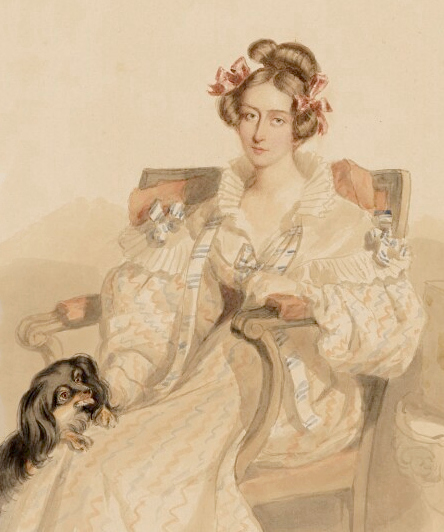
emily eden
I thought this would be of interest to some of you--a memoir recommendation for lovers of Jane Austen.

Read the full post by Pamela Toler at Wonders & Marvels.

Tuesday, February 18, 2014

Review: EMMA by Jane Austen

book cover
Proposed alternate title: Mr. Knightley is Always Right

Original Publication Date: 1815

Genre: women's fiction

Topics: marriage, women, coming of age, friendship, class


Review by heidenkind:


The life of young, pretty, clever, and rich Emma Woodhouse is thrown into chaos—or at least discomfort—when her governess and best friend, Miss Taylor, gets married. Lonely, Emma tries to find other friendships in the small town of Highbury, but her managing ways only seem to spread misery, as her neighbor Mr. Knightley delights in pointing out. Will Emma ever be able to settle into a life of happiness, peace, and tranquility?

I actually liked Emma a lot more than I thought I would based on the film and television adaptations I've seen (of which there are an astonishing number, all things considered). In most adaptations, Emma comes across as a spoiled brat. Not to say she isn't, but I found her more sympathetic in the book.

Emma is separated into three parts: Emma vs Harriet Smith, Emma vs Jane Fairfax, and Emma vs Emma. Emma vs Harriet Smith was, quite frankly, REALLY hard to get through. If I hadn't promised Kelly from Reading with Analysis that I would read Emma for Jane Austen January, I probably would have DNF'd it before I got to Part 2. Emma is just SUCH a manipulative bitch. It was so bad I wondered if Jane Austen wasn't making fun of Prince George, whom she hated but was forced to dedicate Emma to (I guess because he asked her to). After all, like Prinny, Emma is the princess of her little village: no other person is her social equal, and that is NOT a benefit for her, personality- or character-wise. Yet everyone inexplicably thinks she's wonderful; and even if they don't, they don't say anything about it. Also like Prinny, Emma's dad is CRAZY. But, I will say this much for her: when Emma realizes she's made a mistake, she owns up to it and apologizes right away. So going into Part 2, I was inclined to think better of her.

emma woodhouse haters to the left


I found Emma vs Jane Fairfax to be more amusing than Part 1. Mostly because I already knew what was going to happen, so I could enjoy the irony. But there was one thing that drove me insane: conversations that went on and on AND ON. Like we get it already! The joke has been made! Let me give you some examples of the fascinating topics under discussion:

The post office. Did you know they ship mail? And the mail often reaches its recipient! It's a wonder of organization, is what it is. Let's discuss this for TEN PAGES.
*silently screaming*<-me

MRS ELTON: Jane, I'm going to find you a governess position.
JANE: No thank you.
REPEAT AD INFINITUM

Gruel! It's a healthy dinner option for anyone who's ill or has completely given up on life. But did you know it shouldn't be too thick? Nor too thin.

In Emma vs Emma, Emma goes into a hate spiral because Harriet tells her Mr. Knightley is in love with her. And since everyone except Knightley has noticed he's a being moody bastard, Emma is inclined to believe her. I do have to admit I found Mr. Knightley pretty attractive and thought he and Emma had great chemistry. That is, at least until the part of the book where Emma gives him Frank Churchill's letter (and people today whine about email forwarding...) and Knightley goes through it line by line, criticizing everything Frank ever did or was wont to do. Because Knightley's not only a good man, a kind man, a beautiful man; he's the most perfect man to have ever walked the earth! At least since Jesus.

mr knightley gif
Look who's talking, buddy.

But enough unnecessary summary. The sculptor Louise Nevelson once said, "Life isn't one straight line. Most of us have to be transplanted, like a tree, before we blossom." And maybe it's because of that quote that I found Emma to be unsuccessful as a coming of age story. There were times when it reminded me of a Georgian version of Seinfeld: nothing changes. Emma's world is very small (though not idyllic—there are robberies and whatnot), and she never expresses even barest hint of a wish to leave or grow beyond it. She doesn't even move into Knightley's house—which is what, a five minute walk away?—after they're married! Emma may not be as wackadoo as her dad, but just like him she doesn't want anything to change, ever, and I would argue that includes herself. Sure, she realizes she's made a few mistakes over the course of the novel, but the ease with which she faces them and moves on makes me doubt she learned anything from them. For example, when she's like, "Mr. Knightley was right, I never should have befriended Harriet Smith!" it's because she thinks Mr. Knightley is in love with Harriet and she wants him for herself, not because she's had some sort inner revelation about how Harriet is significantly less happy now than she was before Emma condescended to notice her. Even in the last part of the novel she's still pretty selfish.

I also found Emma to be a more cynical novel than other Austen novels I've read. In Pride & Prejudice, you really get the sense that even though Darcy and Elizabeth got off on the wrong foot, they come to a true understanding of one another, flaws and all. With Emma, almost the opposite is true: she starts off as a matchmaker, believing she understands the human heart, and ends up thinking that no one can ever really know another human being. But that's cool, since she doesn't really care all that much anyway.

I'm glad I read Emma. It is a well-written book, but I don't think it will ever be my favorite Austen novel. Or even my fourth-favorite.

Incidentally, I listened to the Librivox version of the book narrated by Moira Fogarty, and she did a fantastic job. She gave every character his/her own voice and everything. I highly recommend it!


Download Emma by Jane Austen at Project Gutenberg|Librivox|GirleBooks

Wednesday, January 30, 2013

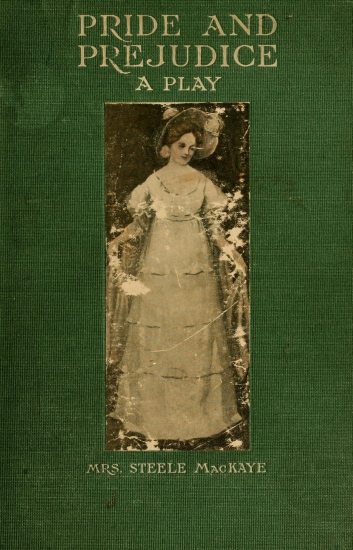
Review: PRIDE & PREJUDICE-A PLAY FOUNDED ON JANE AUSTEN'S NOVEL by Mary Keith Medbery Mackaye

book cover Original Publication Date: 1906

Genre: play

Topics: love, marriage


Review by heidenkind:

This is a play adaptation of Pride & Prejudice from 1906 that's read in the style of a radio play. You can download it, like I did, at Librivox.

To be honest I wasn't expecting much from the play, but I was pleasantly surprised. It was really similar to the 1995 Pride & Prejudice miniseries, almost word-for-word in some scenes. Take, for example, the opening scene of the play:

Mrs. Bennet.
[After a slight pause and laying down her knitting.]
My dear Mr. Bennet, did not you hear me? Did you know that Netherfield Park is let at last?
Mr. Bennet.
[Continues reading and does not answer.]
Mrs. Bennet.
[Impatiently.] Do not you want to know who has taken it?
Mr. Bennet.
[Ceases reading and looks up at her with an amused smile.] You want to tell me, and I have no objection to hearing it.
Mrs. Bennet.
[With animation.] Why, my dear, you must know Lady Lucas says that Netherfield is taken by a young man of large fortune from the North of England. His name is Bingley, and he is single, my dear. Think of that, Mr. Bennet! A single man of large fortune; four or five thousand pounds a year. What a fine thing for our girls!
Mr. Bennet.
How so? How can it affect them?
Mrs. Bennet.
My dear Mr. Bennet, how can you be so tiresome! You must know that I am thinking of his marrying one of them.
Mr. Bennet.
Is that his design in settling here?
Mrs. Bennet.
Design!—Nonsense! How can you talk so? But it is very likely that he will fall in love with one of them, and therefore you must visit him as soon as you can. Consider your daughters, Mr. Bennet! Only think what an establishment it would be for one of them! Sir William and Lady Lucas are determined to go merely on that account. Indeed you must go, for it will be impossible for us to visit him if you do not.
Mr. Bennet.
[Who has risen during this last speech and now stands with his back to the fire, facing Mrs. Bennet.] You are overscrupulous, surely. I dare say Mr. Bingley will be very glad to see you, and I will send a few lines to assure him of my hearty consent to his marrying whichever he chooses of the girls—though I must throw in a good word for my little Lizzy.
Mrs. Bennet.
[Sharply.] I desire you will do no such thing! Lizzy is not a bit better than the others. She is not half as handsome as Jane, nor as good-humoured as Lydia. But you are always giving her the preference.

Sound familiar? Not everything is the same, of course, since a play doesn't have the advantages of different locations like a film does, but I thought the way the story was adapted to a four-act play was very clever. Elizabeth was just as smart and uncompromising as she is in the novel; and while Darcy wasn't quite as rude or interesting, I think he showed a lot more depth than he does some movie versions I've seen.

Of course, not everything works--Caroline Bingley, for instance, had a wildly inappropriate accent (think Diasy from Downton Abbey)--and if I saw this play performed live I'd probably think it was pretty cheesy. Overall, though, the voice performances worked and it was really easy to follow along with the audio.

If you like Austen adaptations, I definitely recommend listening to Mary Mackaye's play. It's only about three hours long and it's super-fun. I'm glad I took a chance on it.


Download Pride & Prejudice-A Play at Librivox|Project Gutenberg

Tuesday, January 22, 2013

Review: SENSE AND SENSIBILITY by Jane Austen

book cover Original Publication Date: 1811

Genre: women's fiction

Topics: romance, society, marriage, women


Review by heidenkind:

Is Tasha about to complain about a classic and beloved novel? Yes, probably.

Elinor and Marianne Dashwood--and that other sister no one cares about--are thrown out of their home after their father dies and must find some men to marry in order to gain access to their money. Unfortunately, they have no sense when it comes to men.

This was the first time I read Sense and Sensibility, and I think it will probably be the last. The novel certainly has its moments, but there's also a lot that bothers me about it, and in the end the bothers outweighed the enjoyment I got from it.

First of all, the title bothers me and has always bothered me. Sense and Sensibility? What does that mean? Also, most of these characters are the antithesis of sensible. Secondly, the story is kind of like Pride & Prejudice, only if Mr. Bennet died at the beginning, Jane married Mr. Collins, Elizabeth made an idiot of herself over Wickham, and Mr. Darcy didn't exist. Depressing!

Third of all, the heroine of the tale is Elinor Dashwood. At first she seemed sensible, but as the novel went on, I found it more and more difficult to sympathize with her, or even like her. I felt kind of bad about how much disliked her, actually, but she's extremely judgy and complacent. I guess more than anything I resented the fact that Jane Austen expected me to approve of her behavior and disapprove of Marianne's, when Marianne was a much more appealing character. The final chapters where Elinor and Edward are all judgy together and she pulls a Fanny Dashwood by convincing Edward that Lucy Steele is a horrible person who never loved him ("Ah, yes, you're right, she was a selfish trollop, why didn't I realize?") when she spent the entire novel pretending to be her friend sums up her entire character for me. UHG. He's already chosen to marry you, why don't you just let it go, beyotch?


Hugh Laurie as a hilarious Mr Palmer.

Basically the only characters I really liked in Sense and Sensibility were Colonel Brandon and the Palmers. Mr Palmer was hilarious. Col Brandon is also pretty awesome, and I loved how Marianne treated him like he was teetering on the edge of death because he was "old" (she was young enough to be his daughter, so); but the conclusion of his and Marianne's romance was super-disappointing, especially after having to listen to Elinor and Edward talk for an entire chapter.

I basically spent the majority of Sense and Sensibility very annoyed with at least one character, and sometimes all the characters. On the plus side, it does read really fast (of course I listened to it on audio, but it felt like it was going by quickly), and the secondary characters are fun. Still, I'm glad this wasn't my first Jane Austen novel, or I'm not sure I would have read any of her other books.


Download Sense and Sensibility by Jane Austen at Project Gutenberg|Librivox|GirleBooks