Showing posts with label germanic horde. Show all posts

Tuesday, April 8, 2014

Review: THE GREAT SECRET by E. Phillips Oppenheim

book cover Original Publication Date: 1908

Genre: spy/thriller

Topics: honor, love, secrets (obvs), resurrection, Germanic horde


Review by heidenkind:

Hardross Courage is a professional cricket player. His name is LITERALLY courage (this would be more amusing if his personality was the opposite of that, but no). When playing a cricket match in London, Courage checks into the worst hotel ever, where he meets a man named Guest. HIS NAME IS LITERALLY GUEST. You following me here? It turns out Guest is dying, and there are a bunch of nasties who want to force him to tell them some sort of secret before he kicks off. When a beautiful American woman with an annoying dog convinces Courage to help Guest by letting him spend his final days at Courage's country estate, Hardross can't say no, even though he has a sneaking suspicion he's about to become embroiled in a very sticky situation.

The Great Secret is not to be confused with The Great Impersonation, also by E. Phillips Oppenheim. The man apparently really liked the word great! I thought The Great Secret a much better book than The Great Impersonation, which is crazy because I enjoyed the hell out of The Great Impersonation. Despite the annoying Courage/Guest naming, The Great Secret had a more complex plot than The Great Impersonation, well-rounded characters, and went in a direction I totally wasn't expecting.

My favorite part of The Great Secret was about halfway through the book. I really want to talk about it, but since it's pretty far into the novel, it's a little spoilery. So avert your eyes if you don't want to know...

Still there? Okay, so after Guest dies, Hardross decides to go to America to investigate. It just so happens the woman from the hotel, Adèle, is heading back to America on the same boat! And her matchmaking auntie immediately likes Courage because he's related to a bunch of muckity-muck aristocrats and pretty rich. So he's invited into their circle and discovers that one of Adèle's suitors, M. de Valentin, claims he's the rightful King of France and wants all these wealthy Americans to fund his return to the throne. And no one says, "But isn't France a republic now?" Because 'Merica. In return, de Valentin promises to turn all the wealthy Americans into dukes and duchesses and earls and stuff. They're eating this stuff up with their silver-plated spoons and Hardross is all like:

cumberbatch gif


But politely, because he has the hots for Adèle and doesn't want to tell her her friends and relatives are cucking frazy. And somehow it all leads back to an evil German plot, so there ya go!

Speaking of Adèle, she's 100x better than Rosamund, the love interest in The Great Impersonation. She's like something out of an Edward Gorey illustration—very dark and unapproachable and mysterious. I'm a sucker for Edward Gorey, so I immediately liked her. But it was when she told Hardross that she'd never been in love, never wanted to be, and that his blandishments were annoying her that I decided she was awesome. Of course, she changes her mind about Hardross inexplicably just so he can pine after her once he returns to England to save Europe from the Germanic horde; but at least at no point in the story does Hardross describe her as childlike.

I also really liked Hardross, despite his stupid last name. He's not exactly the sharpest, but he is likable and has a heart of gold.

The extremely meandery plot of The Great Secret started to lose me in the last third of the novel, and the ending is really abrupt, but overall this is a pretty damn entertaining thriller novel. My goal now is to read every Oppenheim book with the word "great" in the title.

great e phillips oppenheim novels


Download The Great Secret by E. Phillips Oppenheim at Project Gutenberg|Librivox

Wednesday, January 22, 2014

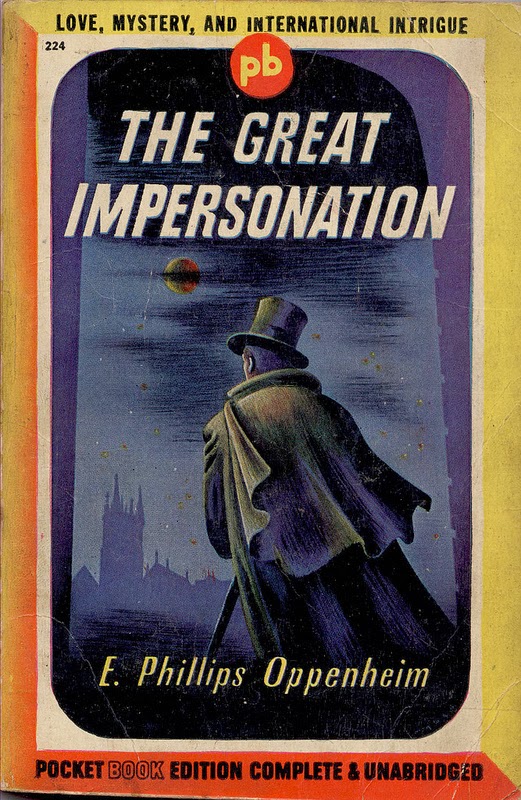
Review: THE GREAT IMPERSONATION by E. Phillips Oppenheim

book cover Original Publication Date: 1920

Genre: Mystery

Topics: Espionage, Germanic horde, WWI, love, civilization vs savagery


Review by heidenkind:

Sir Everard Dominey, living in self-exile in Africa, wakes up after a night of drinking too much whiskey to find himself the guest of Leopold von Ragastein, his doppelganger. The two have many similarities beside their appearance: they both have a natural gift for languages, and Ragastein is also in exile after killing his mistress' husband in a duel. The only major difference between them is that Ragastein is German and therefore EVIL. After spending the night prying into the life of Everard Dominey, Ragastein and his friend, Dr. Schmidt, send Dominey out into the African desert with no water and nothing but extremely salty food, never to be heard from again. Then, taking on the identity of his double, Ragastein goes to England, where he, impersonating Everard Dominey, is in the perfect position to be the greatest and most insidious German spy of all time. But will he have the heart to do what the Kaiser asks of him? And is Everard Dominey really dead?

I decided to read The Great Impersonation after I "overheard" Melody from Redeeming Qualities and Evangeline from Edwardian Promenade talking about it on Twitter. I'm so glad I did! The Great Impersonation is an absolutely great story, good enough for me to overlook the constant references to Rosamund Dominey, Everard's homicidally insane wife, as "childlike" (yes, his wife is insane and homicidal, YET CHILDLIKE. You're hooked now, aren't you?).

As soon as "Dominey" returns to England, the reader is sure two things are going to happen: Leopold's going to fall in love with Dominey's wife, and the real Everard Dominey is going to show up and spoil everything. Of course, this should be something the reader wants to happen, since Leopold is GERMAN and therefore EVIL. But in actuality, Leopold is kind of upstanding and honorable, and—now that he's in England—demonstrates some divided loyalties between England and Germany. It's almost enough to make one think The Great Impersonation might be the only book in all of 20th century English literature where there's a good German character. Almost.

I also liked how The Great Impersonation is a cross between several genres. Yes, you have the whole spy/WWI plot; but it could also arguably be classified as a gothic mystery, what with the ominous Dominey homestead (filled with secret passages, hauntings, superstitious locals, and an adjacent cursed forest, OF COURSE) and the disappearance of Roger Unthank; as well as a coming of age tale.

Basically, if you're looking for an entertaining, fast-paced novel with mystery, romance, and twists, you can't go wrong with The Great Impersonation. I'll definitely be reading more of E. Phillips Oppenheim's work in the future!


Download The Great Impersonation by E. Phillips Oppenheim at Project Gutenberg|Librivox
Thursday, July 25, 2013

Review Round-Up

I haven't posted a review here in a while, not because I'm not reading but because I don't have a lot to say about most of the books I've come across in the last few weeks. I've abandoned most of them, but even those I've managed to finish have been meh. Just in a reading slump, I guess. I did find The Wheel Spins (book The Lady Vanishes was based on) interesting, but it's not in the public domain. I have some brief thoughts on the following novels, though, which might be worth checking out if you're interested.


The Hour of the Dragon by Robert E. Howard

book cover Original Publication Date: 1935-1936

Genre: fantasy

Topics: war, sorcery, revenge, quest, adventure


Review by heidenkind:

Conan is the King of Aquilonia after killing the previous ruler. You know that's not going to last long, and it doesn't: a group of conspirators raise the evil sorcerer Xaltotun from the dead so they can depose Conan and put some other guy on the throne. Due to luck and a slave girl with a crush, Conan manages to escape with his life, but can't regain his throne without a magical stone called the Heart of Ahriman.

This is the first and only novel-length Conan the Barbarian story Howard wrote. I didn't dislike it, but it also wasn't as amazeballs as some of the shorter stories I've read by him. There was only one major female character, who was kind of boring, and I found Xaltotun more interesting than Conan. I did think Howard did a great job of making Conan seem more human in this story, but where were the crazy twists?? The Hour of the Dragon was just too long and felt slightly draggy.

Download The Hour of the Dragon by Robert E. Howard at Project Gutenberg|Librivox

Miss Pim's Camouflage by Lady Dorothy Stanley


Original Publication Date: 1918

Genre: science fiction/fantasy

Topics: World War I, espionage, old lady, germanic horde


Review by heidenkind:

Miss Pim is a middle-aged spinster who feels nearly invisible. Then, one day, she doesn't just feel invisible—she becomes invisible! Soon all the guys at the War Office are feeling her invisible body up and then she's off to France to work as a spy, with the ultimate goal of assassinating the Kaiser.

I really loved the concept of this novel. Old lady adventures for the win! However, there was just wayyyyy too much anti-German propaganda in this book. I mean, I know me some anti-German propaganda (it's impossible to avoid in early 20th century English novels, and even some American novels), but in the case of Miss Pim's Camouflage it was so insanely over-the-top I felt like it overshadowed the story completely.

Interesting side note: if Google is to be trusted, Dorothy Stanley was also a successful painter known as Dorothy Tanner.

Download Miss Pim's Camouflage by Lady Dorothy Stanley at Google Books|Librivox


Aucassin et Nicolette


book cover Original Publication Date: 12th or 13th century

Genre: chantefable (combination sung poetry and verse)

Topics: love, honor, chivalry


Review by heidenkind again:

Aucassin is the son of a count and he really wants to marry a girl named Nicolette, but his dad's like, "Yeahhhhh, Nicolette is pretty and all, but she's a slave and not really appropriate marriage material. How about this nice princess?" And Aucassin's like, "This isn't the 11th century anymore, Dad, I can do what I want. I hate you!" So the count locks Aucassin in his room the dungeon and sends Nicolette away to a nasty viscount. Will these two crazy kids ever get together?

At first I really enjoyed this poem because Aucassin was an idiot. It was quite entertaining. But then Aucassin also turned out to be really mean. I can handle stupid, and I can handle nasty, but stupid AND nasty? I was kind of hoping he'd take a short plunge into a long spear, but instead he and Nicolette ended up getting together through a series of coincidences that were eye-rollingly unbelievable. But Wikipedia says it's meant to be a parody, so maybe that was the point? Either way, Aucassin was too annoying for me.

Download Aucassin et Nicolette at Project Gutenberg|Librivox

Tuesday, February 26, 2013

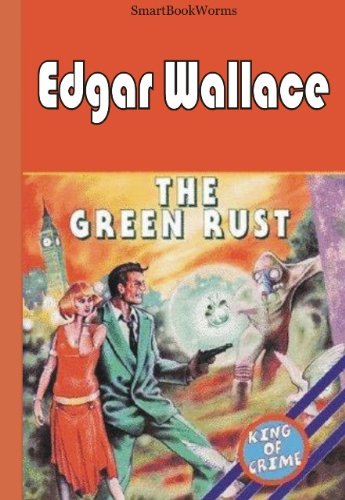
Review: THE GREEN RUST by Edgar Wallace

book cover Original Publication Date: 1919

Genre: science fiction

Topics: Germanic horde, WMDs


Review by heidenkind:

What is the green rust? I don't know. No one knows! It's the McGuffin, okay? It's a bad thing that will destroy THE WORLD, and the nasty Dr. Van Heerden is determined to unleash it... just as soon as he marries Oliva Cresswell. But will Oliva chose him or the mysterious Mr. Beale? Questions!

The Green Rust is the first book I've read by Edgar Wallace, who I take it was the James Patterson of his time (wrote tons of books, was worth millions of dollars). It was soooo pulpy, you guys. If Wallace can find a way to go for shock value, even if it makes no sense in the context of the story, he will do it. For example, the first few chapters run like this: Chapter one, an old billionaire struggles to share his final words, but dies just before he can get them out. But does he die? No, he was murrrrderrred! Chapter two: evil dude is evil and like five guys break into Oliva Cresswell's apartment, why? Who knows. But one of them shows her the green rust!
"What is the Green Rust—what can it do? she asked in bewilderment.
"I hope we shall never know," he said, and in his clear eyes was a hint of terror.

Dun dun dun! Chapter three: Oliva goes to work as normal, because that's what you do when your apartment has been broken into multiple times in one night and you've been shown the green rust, whatever it is--and is fired for no reason! Then three people accost her on the street and offer her jobs involving very little work and double her last salary. Wut?

And you know how Stephen King once said the road the hell is paved with adverbs? Well, if that's true I think Wallace might at the very least be in purgatory, because The Green Rust is flush with adverbs along the lines of, '"Gross!" Oliva exclaimed disgustedly.' Oh, she's disgusted? Wouldn't have guessed that one just from the dialog, thanks.

All that being said, though, I really enjoyed this novel. It's totally cheesy and predictable, but it's also super fun. It has the same sensibility as Scooby Doo or Flash Gordon. Yeah, maybe the writing isn't the best, but the characters are likable: Beale is such an appealing hero, even showing suggestions of being a feminist by referring to Oliva as a partner and saying he never thought of her as a victim. And Van Heerden is so over-the-top evil I couldn't help but warm up to him. Like a German Grumpy Cat (technically he's Dutch, by the way, but hey, close enough).

After Oliva escapes Van Heerden, the book became all about Beale finding the green rust and putting a stop to it, or something, and the story slowed down to a crawl because I didn't really care about the green rust. Other than that, though, I thoroughly enjoyed The Green Rust for what it was, which is over-the-top pulpy entertainment. Worth the read if that sort of thing appeals to you, I think.


Download The Green Rust by Edgar Wallace at Project Gutenberg|Librivox


Monday, August 27, 2012

Review: THE LAND THAT TIME FORGOT by Edgar Rice Burroughs

book cover
Original Publication Date: 1918

Genre: fantasy

Topics: lost world, Germanic horde, jungle adventure


Review:

Bowen J. Tyler is an American whose ship is sunk by a German U-boat during WWI. Long story short: Tyler, his dog, Nobs, and another survivor of the wreck, Lys La Rou, wind up on the submarine with a mixture of British and German crew, and Tyler is the captain. Their goal is to reach an allied port, but because someone is sabotaging the boat by destroying all their navigational equipment, they get horribly lost and eventually find their way to Caspak, an underground world where prehistoric animals and "lower-kind of human[s]" still exist.

Remember that crazy book I reviewed a few months ago, A Strange Manuscript Found In a Copper Cylinder (review here)? Well, The Land That Time Forgot is kind of like that book--even down to Tyler writing of his experiences and sending the manuscript off in a bottle to be found by a random guy in Greenland--except good. -Ish. It really wasn't what I was expecting at all.

First of all, half of the book has nothing to do with Caspak--it's all about Tyler's experiences on the U-boat trying to get the German and English sailors to work together, all while dealing with mysterious sabotage. I suppose a part of me was wondering when the heck we would get to land, forgotten or otherwise, but honestly I was enjoying the story too much to care. Tyler is REALLY funny, and Nobs is very cute and lovable, and the story is a fun, light sea adventure. Lys La Rou, whom Tyler decides he's in love with 60 seconds after they meet, also kicked ass in this section.

Weirdly, once The Land That Time Forgot moved to Caspak, I started to get bored. It was mainly all hunting this dinosaur, hunting that dinosaur, blah blah blah. Also, most of the humor left the narrative, and Lys started acting really lame. At one point she had an existential crisis where she was all, "Life seems a joke, a cruel, grim joke... You are a comic little figure, hopping from the cradle to the grave." Uhg, really, La Rou? Save it for your painfully ironic music videos.

la roux bulletproof

The funniest part of the Caspak section, though, was when Tyler, who is from San Diego, fought off a group of Neanderthals with his mad martial arts skills, commenting, "Californians, as a rule, are familiar with ju-jutsu." Haha, what? 1. Is he serious? and 2. Why didn't you use ju-jutsu on the Deutschlanders then, Tyler?

So that was pretty silly. The conclusion of The Land That Time Forgot left a lot of threads hanging in an obvious attempt to get me to read the second book in the trilogy, and honestly I was kind of glad to be done with it when it was over. It's definitely not as good as A Princess of Mars (which is the only other Edgar Rice Burroughs book I've read so far); but it was better than I thought it would be, and a really quick read. For the most part The Land That Time Forgot was a good book, even if I did roll my eyes a lot in the second half.


Download The Land That Time Forgot by Edgar Rice Burroughs at Librivox|Project Gutenberg

Monday, May 7, 2012

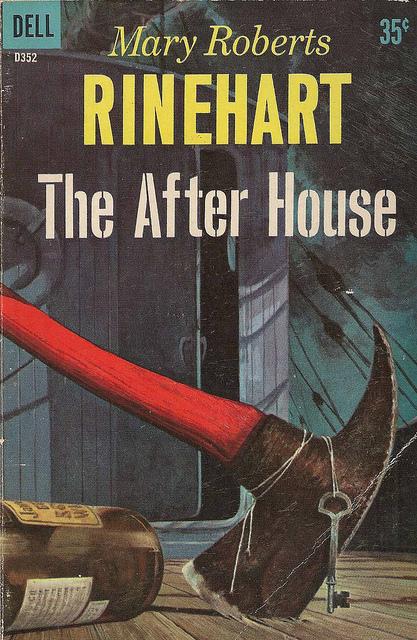
Review: THE AFTER HOUSE by Mary Roberts Rinehart

book cover
Original Publication Date: 1914

Genre: mystery

Topics: sailing, Germanic horde


Review:

Ralph Leslie came down with typhoid only a day after graduating from college. Still weak from illness and with only seven dollars to his name, Leslie's friend sets him up with a summer job on a yacht. There's the forecastle, where the crew (including Leslie) sleep; and the after house, which is where the owner of the yacht and his friends have their rooms. Things seem calm on the surface, but tensions are clearly brewing in the after house, due mainly to the owner's endless drinking.

Then one night, three people on board are murdered, chopped to death by a silent, axe-wielding murderer. Trapped on a small vessel and weeks outside of port, everyone wonders who they can trust and who will be next.

Things I learned from The After House:
  1. Don't trust Germans. They have long names that are difficult to pronounce, are argumentative, and spend too much time philosophizing. I know what you're thinking: Tasha, shouldn't you have already known not to trust Germans from watching EVERY MOVIE EVER MADE? And you're right, I actually did know that, but sometimes I forget because 90% of the people I'm related to are, in fact, German. But still. Argumentative, really?!
  2. There's a reason why people are buried at sea.
  3. Don't be stupid like the hero of this book! At first I had high hopes for Leslie, but he makes one gaff after another, from ordering the blood washed away (evidence, hello! Didn't you go to med school?) to telling the women where exactly they can find the key to where the evidence is kept so they can throw it overboard.
  4. Bad things come to those who drink, especially if you drink whiskey.
Honestly, I have mixed feelings about The After House. For the first half I absolutely loved it. Mary Roberts Rinehart's writing was so sparse and perfect, and I was completely drawn into the story. Then the murders take place and they are SO. CREEPY. First everything is fine, if a little tense; and then all of a sudden there are dead people all over the freaking place in little pieces! Not only that, but no one sees or hears anything, even though they're right next door. It's like Lizzie Borden came back from the dead and is all, "I'm on a boat! *chop chop chop*"

In the second half, though, the pacing started to go off, and inconsistencies in the story began jumping out at me. I expected Leslie to solve the murders on board the ship as they made their way back to port, which would have kept the tension high and offered an elegant conclusion: roll into US waters, show the authorities the culprit, and disembark. Instead, Leslie does very little investigating and moons over a girl, who seems really sketchy. They pull into port with the murders still unsolved, and then everything we already know is retold in court. Basically the story lost all momentum at that point, and the conclusion was riDONculous.

It's still a pretty good book, though, because it's by Mary Roberts Rinehart. I have to wonder if Rinehart herself was a teetotaler; there's a definite presentation in the book about the evils of alcohol, what with the owner of the yacht going into delirium tremens and Leslie dumping all the alcohol overboard. Before that even happens, I was thinking the after house had to be a metaphor for something--either success or the American dream--and Leslie's face is pressed against the glass throughout the entire book. Leslie himself never imbibes, and Rinehart definitely contrasts his behavior with that of the thirstier characters.

The women in this novel are also really interesting. When the murders take place, to me they seemed like the obvious suspects (well, there were some other obvious suspects, but they were TOO obviously obvious, if you know what I mean). The ladies had the opportunity, and come on--people are hacked to death with an axe feet from where they're sleeping and they don't hear anything? Way suspicious. But the men folk never consider one of the women might be the killer, even though they order everyone around, defend themselves with guns and knives, accuse random people of the murders for the sole purpose of throwing suspicion on them, and attempt to destroy evidence. These ladies keep it real, yo. It was extremely frustrating that the thought one of them might be a homicidal maniac never even crossed Leslie's mind.

The After House isn't as good as The Man In Lower Ten (review here), and I probably wouldn't recommend starting with it if you haven't read Rinehart before; but it was pretty damn creepy, and had a deliciously claustrophobic atmosphere, so I think it's worth reading for that.


Read The After House at Project Gutenberg
You might want to know: there are some racial slurs in this book.

Thursday, February 23, 2012

Review: THE RIDDLE OF THE SANDS by Erskine Childers

book cover
Original Publication Date: 1903

Genre: spy, thriller, adventure

Topics: sailing, espionage, Germanic horde


Review:

Carruthers is a bourgeois suit with a desultory job in London with the Foreign Office. He's feeling sorry for himself because he can't enjoy a house party with his friends, when he receives a telegram from a long-forgotten college acquaintance, Davies, inviting Carruthers to join him on his yacht. Carruthers' immediate reaction is that yachting in the Baltic at the end of September sounds like a HORRIBLE idea and he would rather choke; but a few days later, he finds himself on vacation and headed off to meet Davies, towing along a completely random collection of oddly specific items that Davies requested.

When he first arrives, Carruthers' instinct that this trip was a terrible idea seems confirmed. But he soon chills out, only to find Davies invited him to go sailing for a reason: he believes a German spy attempted to kill him in the Frisian Islands, and he needs a partner to help him figure out what the man wanted to hide.

If you picked up this book based purely on the title, you'd probably expect Riddle of the Sands to be some sort of adventure novel or archaeological mystery set in Egypt. You'd be wrong! The "sands" referred to in the title are actually a collection of sandbanks near the Frisian Islands, which are relatively uncharted and difficult to navigate. On board a tiny boat in the middle of a bunch of barren sand banks doesn't sound like the most interesting setting in the world, but the sense of isolation and difficulty Carruthers and Davies face really heightens the tension of the story. It works!

There is a lot of sailing jargon in this novel, which can be a bit difficult for those of us who don't know a jib from a forecastle (*raises hand*), but that's easily overcome because the characters are so awesome. Carruthers, our narrator and protagonist, doesn't know a thing about sailing (even though the author, Erskine Childers, clearly does), and he's so funny it's hard not to enjoy him. He's extremely fussy and a little spoiled, but underneath all his posturing and complaining he's good-hearted. If Karl from An Idiot Abroad was a Victorian gentleman, he'd be pretty similar to Carruthers.

Davies, meanwhile, is a weird combination of a bloke and a fanatic. He really only cares about one thing: sailing. Everything else tends to fall by wayside, and around people who aren't sea-worthy he's awkward, just because he has no idea what to talk about. But he's also basically a good guy, and not as dense as he first seems.

The main thing that I didn't like about Riddle of the Sands was that there were hardly any female characters. I'm a woman; I like to read books with women in them, what can I say. There was one lone female character in this story: the daughter of the German spy. But she didn't do anything; her role in the story was mainly to quell any suspicions that might crop up over Davies' heterosexuality. Or lack thereof.

Aside from that, though, as a espionage thriller this novel is pretty top-notch. Childers knew what he was talking about and put a lot of thought into what role an area like the Frisian Islands might serve in a military conflict between Germany and England, and it shows. Unlike many thrillers, Riddle of the Sands doesn't feel fantastical at all, and I'm not surprised it inspired generations of novelists as well as real-world policy enacted by politicians and military peeps.

I first head about this novel on Evangeline Holland's and Melody B's list of Downton Abbey-era fiction at Edwardian Promenade. I highly recommend you check it out!

Thursday, February 16, 2012

Review: PRINCESS MARITZA by Percy James Brebner

book cover
Original Publication Date: 1906

Genre: adventure, romance

Topics: knight-in-shining armor, quest, Germanic horde


Review:

I'm not entirely sure why I decided to download this book. I think it probably popped up as a, "If you enjoyed this book, try..." after I finished Prisoner of Zenda by Anthony Hope. And thematically, it is pretty similar: you have your English gentleman traveling across Europe, saving an obscure kingdom with a vaguely Germanic name, and falling in love with the princess. Except, of course, Prisoner of Zenda's really good, and Princess Maritza... isn't.

Desmond Ellery is a former officer with a dark past and a strong jaw. One day he's wandering about in a meadow, when he runs into the most beautiful woman he's ever seen--his words--who is actually a school girl running away from her studies. She explains to him she's an exiled princess and she would sure appreciate it if he helped her regain her throne. So, naturally, that's just what he does.

The writing style is insanely flowery, and not in a good way (not that there is a good way). I think it's because of this that the pacing of the novel is so slow. I hated the princess right off the bat, who's basically like, "I'm beautiful, I'm not afraid to admit I know it! I want to be a man! My goal after graduating is the political takeover of a country I've never been to!" Awesome. Basically, she's just an object, which isn't surprising; but she's also annoying and shallow.

I did like how Desmond's past is very mysterious, but Desmond himself is pretty boring. The flow of the story can be pretty jumpy sometimes, as well, and is full of paranoia about the Germanic Horde Taking Over Europe. I eventually decided to give up after the book put me to sleep.

In other words, I'm going to stick with Anthony Hope for the time being.