I haven't posted a review here in a while, not because I'm not reading but because I don't have a lot to say about most of the books I've come across in the last few weeks. I've abandoned most of them, but even those I've managed to finish have been meh. Just in a reading slump, I guess. I did find The Wheel Spins (book The Lady Vanishes was based on) interesting, but it's not in the public domain. I have some brief thoughts on the following novels, though, which might be worth checking out if you're interested.
 Original Publication Date: 1935-1936
Genre: fantasy
Topics: war, sorcery, revenge, quest, adventure
Review by heidenkind:
Conan is the King of Aquilonia after killing the previous ruler. You know that's not going to last long, and it doesn't: a group of conspirators raise the evil sorcerer Xaltotun from the dead so they can depose Conan and put some other guy on the throne. Due to luck and a slave girl with a crush, Conan manages to escape with his life, but can't regain his throne without a magical stone called the Heart of Ahriman.
This is the first and only novel-length Conan the Barbarian story Howard wrote. I didn't dislike it, but it also wasn't as amazeballs as some of the shorter stories I've read by him. There was only one major female character, who was kind of boring, and I found Xaltotun more interesting than Conan. I did think Howard did a great job of making Conan seem more human in this story, but where were the crazy twists?? The Hour of the Dragon was just too long and felt slightly draggy.
Download The Hour of the Dragon by Robert E. Howard at Project Gutenberg|Librivox
 Original Publication Date: 1918
Genre: science fiction/fantasy
Topics: World War I, espionage, old lady, germanic horde
Review by heidenkind:
Miss Pim is a middle-aged spinster who feels nearly invisible. Then, one day, she doesn't just feel invisible—she becomes invisible! Soon all the guys at the War Office are feeling her invisible body up and then she's off to France to work as a spy, with the ultimate goal of assassinating the Kaiser.
I really loved the concept of this novel. Old lady adventures for the win! However, there was just wayyyyy too much anti-German propaganda in this book. I mean, I know me some anti-German propaganda (it's impossible to avoid in early 20th century English novels, and even some American novels), but in the case of Miss Pim's Camouflage it was so insanely over-the-top I felt like it overshadowed the story completely.
Interesting side note: if Google is to be trusted, Dorothy Stanley was also a successful painter known as Dorothy Tanner.
Download Miss Pim's Camouflage by Lady Dorothy Stanley at Google Books|Librivox
 Original Publication Date: 12th or 13th century
Genre: chantefable (combination sung poetry and verse)
Topics: love, honor, chivalry
Review by heidenkind again:
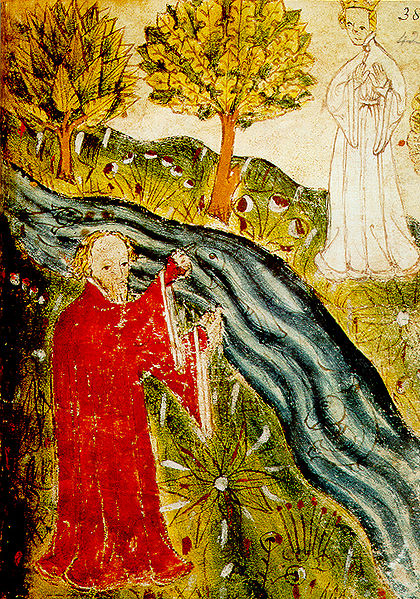
Aucassin is the son of a count and he really wants to marry a girl named Nicolette, but his dad's like, "Yeahhhhh, Nicolette is pretty and all, but she's a slave and not really appropriate marriage material. How about this nice princess?" And Aucassin's like, "This isn't the 11th century anymore, Dad, I can do what I want. I hate you!" So the count locks Aucassin inhis room the dungeon and sends Nicolette away to a nasty viscount. Will these two crazy kids ever get together?
At first I really enjoyed this poem because Aucassin was an idiot. It was quite entertaining. But then Aucassin also turned out to be really mean. I can handle stupid, and I can handle nasty, but stupid AND nasty? I was kind of hoping he'd take a short plunge into a long spear, but instead he and Nicolette ended up getting together through a series of coincidences that were eye-rollingly unbelievable. But Wikipedia says it's meant to be a parody, so maybe that was the point? Either way, Aucassin was too annoying for me.
Download Aucassin et Nicolette at Project Gutenberg|Librivox
The Hour of the Dragon by Robert E. Howard
 Original Publication Date: 1935-1936
Genre: fantasy
Topics: war, sorcery, revenge, quest, adventure
Review by heidenkind:
Conan is the King of Aquilonia after killing the previous ruler. You know that's not going to last long, and it doesn't: a group of conspirators raise the evil sorcerer Xaltotun from the dead so they can depose Conan and put some other guy on the throne. Due to luck and a slave girl with a crush, Conan manages to escape with his life, but can't regain his throne without a magical stone called the Heart of Ahriman.
This is the first and only novel-length Conan the Barbarian story Howard wrote. I didn't dislike it, but it also wasn't as amazeballs as some of the shorter stories I've read by him. There was only one major female character, who was kind of boring, and I found Xaltotun more interesting than Conan. I did think Howard did a great job of making Conan seem more human in this story, but where were the crazy twists?? The Hour of the Dragon was just too long and felt slightly draggy.
Download The Hour of the Dragon by Robert E. Howard at Project Gutenberg|Librivox
Miss Pim's Camouflage by Lady Dorothy Stanley
 Original Publication Date: 1918
Genre: science fiction/fantasy
Topics: World War I, espionage, old lady, germanic horde
Review by heidenkind:
Miss Pim is a middle-aged spinster who feels nearly invisible. Then, one day, she doesn't just feel invisible—she becomes invisible! Soon all the guys at the War Office are feeling her invisible body up and then she's off to France to work as a spy, with the ultimate goal of assassinating the Kaiser.
I really loved the concept of this novel. Old lady adventures for the win! However, there was just wayyyyy too much anti-German propaganda in this book. I mean, I know me some anti-German propaganda (it's impossible to avoid in early 20th century English novels, and even some American novels), but in the case of Miss Pim's Camouflage it was so insanely over-the-top I felt like it overshadowed the story completely.
Interesting side note: if Google is to be trusted, Dorothy Stanley was also a successful painter known as Dorothy Tanner.
Download Miss Pim's Camouflage by Lady Dorothy Stanley at Google Books|Librivox
Aucassin et Nicolette
 Original Publication Date: 12th or 13th century
Genre: chantefable (combination sung poetry and verse)
Topics: love, honor, chivalry
Review by heidenkind again:
Aucassin is the son of a count and he really wants to marry a girl named Nicolette, but his dad's like, "Yeahhhhh, Nicolette is pretty and all, but she's a slave and not really appropriate marriage material. How about this nice princess?" And Aucassin's like, "This isn't the 11th century anymore, Dad, I can do what I want. I hate you!" So the count locks Aucassin in
At first I really enjoyed this poem because Aucassin was an idiot. It was quite entertaining. But then Aucassin also turned out to be really mean. I can handle stupid, and I can handle nasty, but stupid AND nasty? I was kind of hoping he'd take a short plunge into a long spear, but instead he and Nicolette ended up getting together through a series of coincidences that were eye-rollingly unbelievable. But Wikipedia says it's meant to be a parody, so maybe that was the point? Either way, Aucassin was too annoying for me.
Download Aucassin et Nicolette at Project Gutenberg|Librivox