Friday, November 1, 2013

Review: PYGMALION by George Bernard Shaw


Original Publication Date: 1912 -- Genre:  Play, drama -- Topics: Coming of age, bildgunsroman Review by : Liz Inskip-Paulk (www.ravingreader.wordpress.com)
 
Although having been vaguely familiar with this story, I’d never actually sat down and read the actual play or researched its background, so decided to do that this week. I’m quite new to reading plays and it’s rather a different experience than reading a novel, but it’s enjoyable all the same. This one, based on Greek myth, is a familiar story structure based on taking someone (sort of Noble Savage/Frankenstein idea) and then transforming them into a higher class of creature (a la Cinderella tale).  And as a sign of the times and the national culture, this play’s characters are extremely class-ridden. (There’s also a trace of the ongoing science versus art debate as well.)

In this case, the characters of Dr. Higgins and Colonel Pickering, two self-taught scholars in linguistics, pull flower seller Eliza Doolittle off the streets and teach her how to become a Duchess. There are, of course, unforeseen events that occur and it’s actually much more serious that the adaptation “My Fair Lady” would have you believe. There’s definitely an element of Higgins/Pickering (both men) being Superior Gods of a type, and Eliza (the female character) being molded/taught and in the position of a child or less being.

 (It’s also argued that Pinocchio is an adaptation of this Greek myth as well, and the narrative was well known before this play and now afterwards, Magnum PI and Star Trek: Voyager, for instance, both have versions, and then there are numerous Hollywood versions including Pretty Woman and with an interesting twist backwards, the Stepford Wives.)

According to Greek myth (and Ovid, although I haven’t read Ovid), Pygmalion was a sculptor who fell in love with a statue he carved. (The statue’s name was Galatea, FYI, and quite frequently the two names are paired together. (Doesn’t come up too often in my social circles though.)  The story finishes with a happy ending in most versions (as there was a popular demand for that), but Shaw plainly didn’t want that to happen (even though it did in some of the more commercial stage productions – which he hated.) In 1916, four years after the play had first been staged, Shaw was cross enough to add an afternote to the play in which he explains why he thought the ending had to be the way he wrote it. (It’s not a predictable ending, for the most part. The narrative is also quite feminist for the times, although that decision is supported by Shaw’s background and philosophy.)

 “I sold flowers. I didn’t sell myself. Now you’ve made a lady of me, I’m not fit to sell anything else.”

Shaw was an Irish playwright and worked to establish the London School of Economics (although it’s not clear to me what the connection would be between these two areas.) His mum was a professional singer, one of his sisters was a professional singer, so there was stage in his bones and childhood experiences.  He was an ardent socialist (clear in this play) and, curiously enough, is the only person who has ever been awarded both the Nobel Prize in Literature (1925) and an Oscar (1935) for his work on Pygmalion. Having no want for public honor, Shaw wanted to refuse the Nobel but accepted it at his wife’s bequest. The financial prize was personally rejected and he asked that it be used to finance translation of a Swedish playwright’s work.

Interesting note: Shaw joined the British Interplanetary Society, a group focused on space travel and exploration, when he was 91. I love that he was always learning something new throughout his life.


Download Pygmalion by George Bernard Shaw at Project Gutenberg|Librivox|

Monday, October 21, 2013

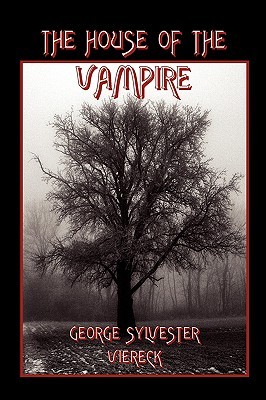
Review: THE HOUSE OF THE VAMPIRE by George Sylvester Viereck

book cover Original Publication Date: 1907

Genre: horror

Topics: vampires, love, art


Review by heidenkind:

Ernest is a young writer with great ambition, so he's thrilled when the famous author, Reginald Clarke, offers him a room in his house while Ernest works on the next Great American Novel. Weirdly, though, Ernest can never focus on his own work; and in the meanwhile Reginald Clarke's most recent writings seem to be taken directly from Ernest's ideas, even though he never told anyone about them. Will Ernest's girlfriend and bestie be able to rescue him from Reginald Clarke's clutches before he loses his talent and writing ability forever?

When Chris reviewed The House of the Vampire here last year, I immediately knew I wanted to read it. A psychic vampire who steals people's ideas? Sounds like a few professors I've known (haha, I kid—but the relationship between Clarke and Ernest does have a very mentorship-gone-wrong feeling to it that sometimes happens in academia).

Despite Chris's review, though, The House of the Vampire wasn't exactly what I was expecting. I was thinking Reginald Clarke's house would be chock full of young artists participating in a bacchanal free-for-all, but instead Reginald Clarke—he's always referred to by both his first and last names—very monogamously focuses on destroying one artist's life at a time.

There was also less homosexual innuendo than I expected, considering this book is touted at the "first gay vampire book" (aside from, you know, Carmilla). Ernest and his bestie have a rather close relationship, but both he and Reginald Clarke are obviously interested in women; and honestly, in comparison to the Victorian vampire novels I've read, the sexual innuendo in The House of the Vampire bordered on nonexistent. Reginald Clarke's psychic vampirism is a metaphor, of course, just not for sex. Instead, it represents unchecked power. Rather than being modeled off of traditional vampires, Reginald Clarke is more along the lines of Nietzsche's Übermensch, which  Rüdiger Safranski said, "...represents a higher biological type reached through artificial selection and at the same time is also an ideal for anyone who is creative and strong enough to master the whole spectrum of human potential, good and 'evil', to become an 'artist-tyrant'." (Wikipedia) That's a pretty close description of Reginald Clarke, and I would say that it's clear George Sylvester Viereck was not a proponent of Nietzsche's philosophy IF I didn't also know he was a full-on Nazi. Interesting dichotomy of belief there.

I was also pleasantly surprised—even shocked—at the depth of insight Viereck brought to Ethel, one of Reginald Clarke's former victims and Ernest's muse. She's The House of the Vampire's single major female character, so it's not like the book passes the Bechdel Test or anything; but Viereck does treat her as a 100% human, fully-realized character who drives the actions of the main characters in the second half of the book. She's intelligent, independent, and sympathetic. She might be the best female character written by a man I've ever come across.

Overall The House of the Vampire was a very interesting, entertaining, slightly creepy read. It's more about art and ideas than vampires, but I'm cool with that. Definitely worth checking out.


Download The House of the Vampire by George Sylvester Viereck at Project Gutenberg|Librivox

Thursday, August 29, 2013

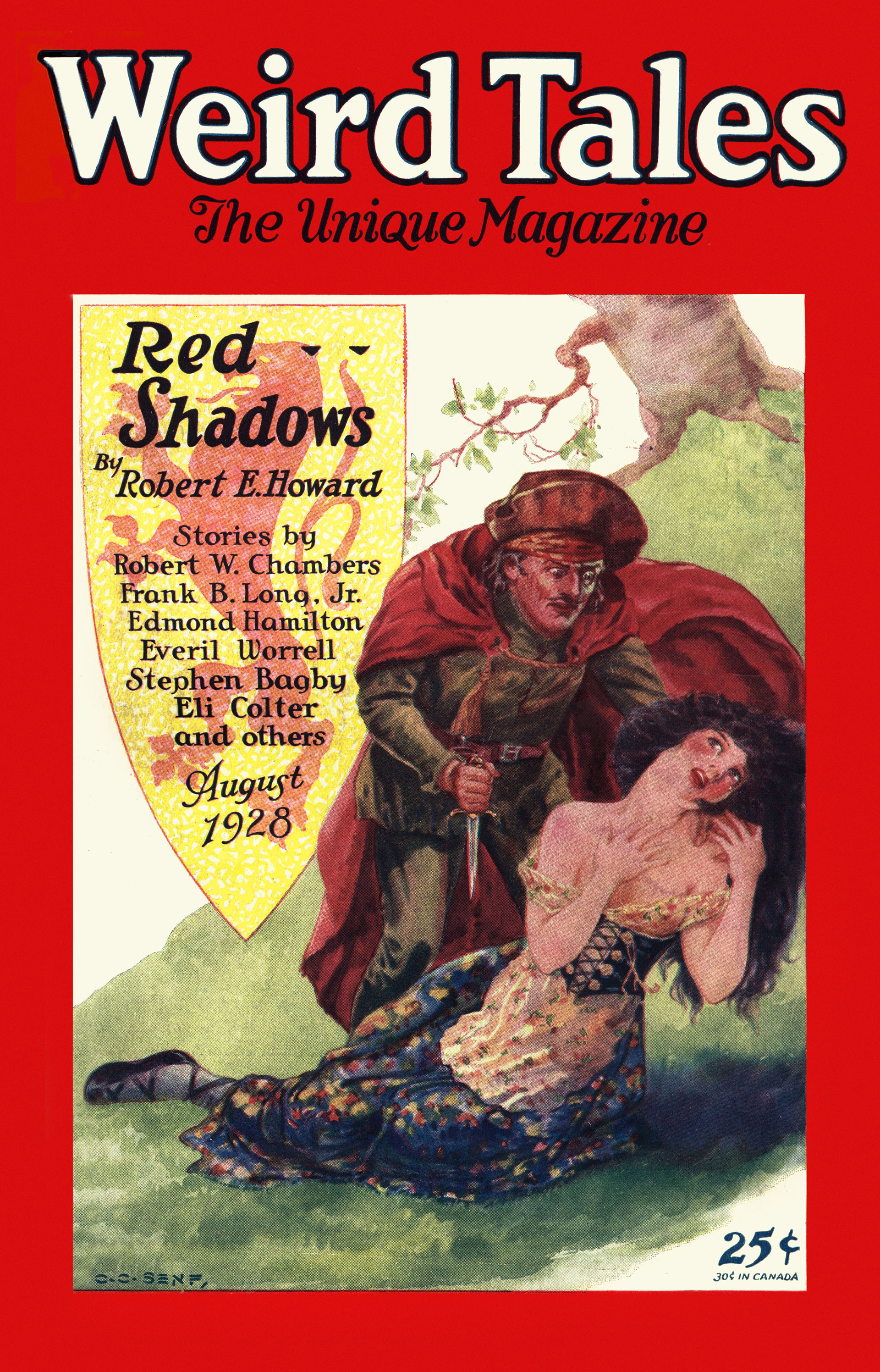
Review: RED SHADOWS by Robert E. Howard

book cover Original Publication Date: 1928

Genre: adventure

Topics: revenge, swashbuckling


Review by heidenkind:

Solomon Kane, an English adventurer with a wicked blade, is wandering aimlessly around France when he randomly stumbles across a girl. She's been robbed and attacked and left to die. As her life fades away, Kane decides to seek vengeance! against leader of the brigands who killed her, Le Loup.

Red Shadows isn't a Conan story, which is slightly disappointing. But it is a swashbuckling tale with swordfights, gigantic Baroque hats, and over-the-top dialog. ("Fires of Hades! A girl!") So it's still really fun.

The writing style is more abrupt than Robert E. Howard's Conan novels: each chapter feels like a vignette and then we're abruptly moved to a completely different place and time. I kind of think Solomon also has less personality than Conan; or at least, his motivations are less clear. Conan's motivation is self-interest, which isn't particularly complex, but Kane is a like a vengeance machine. Like that's all he does, for no benefit to himself that I could see. In fact, it seems to bum him out. Maybe some of his backstory is revealed in the later stories, but for Red Shadows there wasn't a lot of character development going on. Maybe if the only female character hadn't died in chapter one I'd be happier with this novella.

you killed my father prepare to die


Still, overall it was a good story. Kane travels to Africa in his obsessive quest to take down Le Loup, which is totally random, and there are literally pages where all Howard talks about are his characters' eyes as they have the longest stare-down in history. I love it. And I definitely wouldn't object to reading more Solomon Kane stories, because who doesn't love a highly skilled swordsman whose mission is vengeance, right?


Download Red Shadows by Robert E. Howard at Project Gutenberg Australia|Librivox

Monday, August 26, 2013

THE AWAKENING - Kate Chopin


Original Publication Date: 1899
Genre: American, classic 
Topics: coming-of-age; feminist; Louisiana


Review by : Liz Inskip-Paulk (www.ravingreader.wordpress.com)


"The voice of the sea is seductive; never ceasing, whispering, clamoring, murmuring, inviting the soul to wander for a spell in abysses of solitude; to lose itself in mazes of inward contemplation."
 
This book (a novel? A novella?) is really the story of a coming-of-age of an adult woman in Louisiana who is struggling with becoming an independent person while being married to a wealthy man she doesn’t particularly love.  A young male acquaintance named Robert is the catalyst for her realization of the possibility that she could be happy and independent, but how to do that, in this world of strict etiquette and gender expectations?
 
I had been thinking (from an earlier reading) that this edition of Chopin’s work was an early Feminist work (published in 1899). However, then, on further delving, it was pointed out that very few people read “The Awakening” when it first came out as it was not a commercial success and it received some pretty awful reviews so it wasn’t republished.  
 
Her other short stories were published and even anthologized, but “The Awakening” didn’t really receive much positive attention until 1969 when a volume of her work was republished and regained attention.  And this is rather a shame, as this is a good read with some great descriptions of Bayou coastal life and life in the South.
 
On reflection, Chopin’s The Awakening’s critical rejection could also have been to the misogyny of the time – most of the media reviewers were men (at that time), and as her leading character was a frustrated married woman who refused to accept the limitations of the woman’s role and instead chose an alternative way (thus completely rejecting societal mores), it might not be that surprising that the male reviewers did not embrace this radical viewpoint.
 
 "Has she," asked the Doctor, with a smile, "has she been associating of late with a circle of pseudo-intellectual women—super-spiritual superior beings? My wife has been telling me about them."
 
So, yes, it’s a Feminist work but it’s been quite widely argued that it wasn’t written to bring attention to the issue of feminism, emancipation or any other cause. Chopin was not involved in any Feminist or other causes (according to researchers) and it’s argued that Chopin was just writing the world as she saw it as an artist and writer and not trying to change the world. She wasn’t using it as a tool to further women’s suffrage, even accidentally.
 
However, as I write this, surely it’s clear from even a cursory reading of this that Chopin believed in the right of a woman to have an independent life and was a pre-supporter of Woolf’s concept of “a room of her own”, whether written down or not.  And by so doing, wouldn’t it be logical that she would want all the other freedoms that would come with that? Or was it the whole concept of individual freedom that Chopin was admiring and gender was irrelevant? And how would race fit into that? (She lived for most of her life in Louisiana which was a huge piece in the slavery industry picture then.)
 
I don’t know. It’s tough to read something that was written at the end of the nineteenth century without looking at it with the perspective of a twenty-first century reader. How can you really ever take that pair of glasses off because your (own) experience of life has to influence how you interpret things, especially works as nebulous as art? Perhaps Chopin was really just writing this to make a buck and there wasn’t any extra meaning to this whole thing.
 
 
Download The Awakening by Kate Chopin at Project Gutenberg|Librivox|

Wednesday, August 21, 2013

Review: THE SEVEN SLEUTHS' CLUB by Carol Norton

book cover Original Publication Date: 1928

Genre: middle-grade

Topics: friendship, equality            


Review by heidenkind:

In the small town of Sunnyside, seven high school girls start a club called the SSC, which originally means Spread Sunshine Club until one of the girls figures out their brothers are in a Conan-Doyle sleuthing club. After he tells her girls can't solve mysteries, they decide to change their name to the Seven Sleuths Club and look for mysteries to solve. But before that happens, they have to deal with their annoying brothers, schoolwork, and a new girl in town who's a bit of a snob.

The Seven Sleuths' Club is a combination of Little Women and The Babysitters' Club, with Moral Lessons about treating everyone equally regardless of class or race (and, more subtly, irrespective of gender), the value of hard work, and the importance of kindness and compassion. Despite that, the book doesn't come off as preachy—I probably only noticed the Moral Lessons because I'm old and I notice stuff like that. The lessons are well-integrated into the story and if I was a middle-grade reader—the novel's intended audience—it wouldn't have been too twee for me.

Although there are eight main girl characters, the heroine of the story is really Geraldine, a rich city girl whose father sends her to Sunnyside because she's traipsing out with boys at night without telling him. As her dad explains in a letter to the Colonel, who's taking care of her, "Now I want Geraldine to have boy friends in a frank, open way, but of this sub-rosa business, my son and I heartily disapprove," which is quite open-minded of him. At first the girls of the SSC make fun of Geraldine because she's a horrible snob, but gradually we learn she's just a poor little rich girl who never had a mom to teach her manners and she gets an attitude adjustment.

The girls of the SSC were pretty interchangeable as characters—they're all more or less church-going goody goodies—but I liked Geraldine. Another character whom I LOVED was Danny O’Neil, the son of a tenant farmer who's Irish. Danny's passion is art but his dad beats him whenever he sees him drawing. Now here's the kicker: for Valentine's Day, he carves book ends for one of the girls because he know she loves to read! BEST GIFT EVER. He is so sweet.

The Seven Sleuths' Club most definitely passes the Bechdel Test—the girls talk about school work, events they're planning, their hobbies, and of course what sorts of mysteries they're going to solve (it takes nearly the entire book for them to find one). But I'm not sure I would call it feminist or say that the girls have demonstrable agency, since all the decisions they make are a response to what men do. It starts with the formation of the club—the boys have a detective club, we need a detective club!—and moves on to Geraldine, who only decides to "improve herself" when the boy she's crushing on says he wants to marry a girl who's a decent homemaker. *eyeroll* Still, there are some light—very light—digs at the boys, and eventually the two clubs join in an equal partnership. Oh, and the idea that men and women can't have platonic friendships? Carol Norton obviously doesn't agree: although there are a few romances going on in the story, for the most part all the girls and boys in the novel are simply friends who hang out together.

While The Seven Sleuths' Club isn't exactly feminist by modern standards, and is a little preachy and overly cute (although much less so than other books of its ilk like, say, Little Women), I still enjoyed it and loved the characters. Definitely worth checking out if you're interested in historic middle-grade fiction!


Download The Seven Sleuths' Club by Carol Norton at Project Gutenberg|Librivox

Thursday, July 25, 2013

Review Round-Up

I haven't posted a review here in a while, not because I'm not reading but because I don't have a lot to say about most of the books I've come across in the last few weeks. I've abandoned most of them, but even those I've managed to finish have been meh. Just in a reading slump, I guess. I did find The Wheel Spins (book The Lady Vanishes was based on) interesting, but it's not in the public domain. I have some brief thoughts on the following novels, though, which might be worth checking out if you're interested.


The Hour of the Dragon by Robert E. Howard

book cover Original Publication Date: 1935-1936

Genre: fantasy

Topics: war, sorcery, revenge, quest, adventure


Review by heidenkind:

Conan is the King of Aquilonia after killing the previous ruler. You know that's not going to last long, and it doesn't: a group of conspirators raise the evil sorcerer Xaltotun from the dead so they can depose Conan and put some other guy on the throne. Due to luck and a slave girl with a crush, Conan manages to escape with his life, but can't regain his throne without a magical stone called the Heart of Ahriman.

This is the first and only novel-length Conan the Barbarian story Howard wrote. I didn't dislike it, but it also wasn't as amazeballs as some of the shorter stories I've read by him. There was only one major female character, who was kind of boring, and I found Xaltotun more interesting than Conan. I did think Howard did a great job of making Conan seem more human in this story, but where were the crazy twists?? The Hour of the Dragon was just too long and felt slightly draggy.

Download The Hour of the Dragon by Robert E. Howard at Project Gutenberg|Librivox


Miss Pim's Camouflage by Lady Dorothy Stanley


Original Publication Date: 1918

Genre: science fiction/fantasy

Topics: World War I, espionage, old lady, germanic horde


Review by heidenkind:

Miss Pim is a middle-aged spinster who feels nearly invisible. Then, one day, she doesn't just feel invisible—she becomes invisible! Soon all the guys at the War Office are feeling her invisible body up and then she's off to France to work as a spy, with the ultimate goal of assassinating the Kaiser.

I really loved the concept of this novel. Old lady adventures for the win! However, there was just wayyyyy too much anti-German propaganda in this book. I mean, I know me some anti-German propaganda (it's impossible to avoid in early 20th century English novels, and even some American novels), but in the case of Miss Pim's Camouflage it was so insanely over-the-top I felt like it overshadowed the story completely.

Interesting side note: if Google is to be trusted, Dorothy Stanley was also a successful painter known as Dorothy Tanner.

Download Miss Pim's Camouflage by Lady Dorothy Stanley at Google Books|Librivox


Aucassin et Nicolette


book cover Original Publication Date: 12th or 13th century

Genre: chantefable (combination sung poetry and verse)

Topics: love, honor, chivalry


Review by heidenkind again:

Aucassin is the son of a count and he really wants to marry a girl named Nicolette, but his dad's like, "Yeahhhhh, Nicolette is pretty and all, but she's a slave and not really appropriate marriage material. How about this nice princess?" And Aucassin's like, "This isn't the 11th century anymore, Dad, I can do what I want. I hate you!" So the count locks Aucassin in his room the dungeon and sends Nicolette away to a nasty viscount. Will these two crazy kids ever get together?

At first I really enjoyed this poem because Aucassin was an idiot. It was quite entertaining. But then Aucassin also turned out to be really mean. I can handle stupid, and I can handle nasty, but stupid AND nasty? I was kind of hoping he'd take a short plunge into a long spear, but instead he and Nicolette ended up getting together through a series of coincidences that were eye-rollingly unbelievable. But Wikipedia says it's meant to be a parody, so maybe that was the point? Either way, Aucassin was too annoying for me.

Download Aucassin et Nicolette at Project Gutenberg|Librivox

Monday, July 1, 2013

Review of THE SECRET ADVERSARY by Agatha Christie

book cover Original Publication Date: 1922

Genre: mystery, adventure
 
Topics: espionage, wwi, love, master criminal


Review by heidenkind:


Tommy and Tuppence are old friends who run into one another in post-WWI London and find themselves in the same boat: they're broke, unable to find work, and on the verge of being thrown out of their respective abodes. As they're musing over their impecunious fortunes, Tuppence has an idea: they should start their own business and be professional adventurers! Tommy agrees to put an ad in the paper just to humor her, but no sooner do they part ways than Tuppence receives a job offer from a very suspicious bloke. Beggars can't be choosers, however, so Tuppence agrees to accept a retainer, and in short order she and Tommy are sucked into a world of international intrigue, missing documents, spies, and master criminals. And that's just in the first few chapters!

This is only the third Agatha Christie novel I've read. The other two were Murder on the Orient Express, which was very good but didn't inspire me to read more Hercule Poirot books; and The Mysterious Affair at Styles, which was just okay. So I wasn't expecting to be wowed by The Secret Adversary.

BUT I TOTALLY WAS.

The Secret Adversary is a very different type of book from Christie's Hercule Poirot novels. For one, it's hilarious. Whenever Tommy and Tuppence get together there's snappy, clever dialog, and the story is delightfully ridiculous with plenty of opportunities for hijinks. The coincidences in this novel are just mind-boggling, but whatever. As long as Tommy and Tuppence continue having adventures, Christie can throw as many incredible happenstances into this book as she wants.

Speaking of Tommy and Tuppence... I LOVE THEM! I need my own Tommy and Tuppence to hang with, you guys. I AM SERIOUS. The other characters in the book are also really fun, from Julius P. Hersheimmer, the American billionaire, to Albert, the elevator operator who loves gangster movies.

As for the mystery, it worked surprisingly well considering the pool of suspects consists of basically two, possibly three, men. Christie does a great job of planting red herrings that had me thinking I knew who Mr. Brown—the criminal mastermind—was, but at the same time not being quite sure.

The Secret Adversary is in no way a realistic book. It is a proudly fluffy, sublimely ridiculous tale. In a lot of ways it reminded me of The Man Who Was Thursday (which I loved), only much less metaphysical: the cabal organization, run by a mysterious man who is everywhere yet whom no one has ever seen; a series of fun, entertaining adventures; and then everyone lives happily ever after. In a word, delightful.

I can't wait to read all of Tommy and Tuppence's other stories! If you haven't read anything by Christie before, The Secret Adversary is a great place to start.


Download The Secret Adversary by Agatha Christie at Project Gutenberg