Tuesday, March 25, 2014

Review: THE LOST DUCHESS by Anonymous

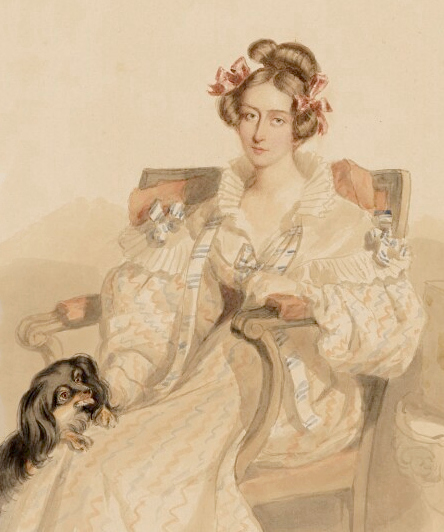
book cover Original Publication Date: 1909 (in The Lock and Key Library, ed. by Julian Hawthorne)

Genre: short story

Topics: comedy of errors, kidnapping, marriage, aristocracy


Review by heidenkind:

The Duke of Datchet is stressing out over a visit from the Prince of Wales when he receives very strange news: his duchess has disappeared! The duke is more irritated than anything, until he's presented with a note in his wife's handwriting along with a lock of her hair. It turns out the duchess has been kidnapped! The kidnappers demand 500 pounds in gold before 5:30 PM, or they'll send the duke the duchess' little finger. And if that doesn't work, "Other portions of her grace will follow."

I was expecting The Lost Duchess to be rather dire and serious, but it was the complete opposite of that—it was a delightful comedy starring a blustery, confused duke, a dimwitted duchess, and a clever dandy who happens to be the duke's cousin. Everything plays out like a caper movie (I adore caper movies), but more light-hearted and satirical than, say, The Sting.

The narrator of The Lost Duchess, Angleet on Librivox, did a fantastic job with all the British accents, giving each character his or her own voice, and playing up the farcical aspects of the story.

I would love to find out more about this story and the person who wrote it, because it was ridiculously clever and fun. I'm really curious about when The Lost Duchess was originally written, because in my head I kept picturing the characters in 18th-century garb. But on the other hand, it reads very modern—kidnapping people for ransom and sending severed body parts as proof of life is something I'd associate with the 20th century. I also wonder why the author decided to remain anonymous, since The Lost Duchess is really well-written and funny, and there isn't anything particularly offensive about it. Unfortunately, I wasn't able to discover anything about the story beyond the fact that it was included in The Lock and Key Library story collection.

In any case, if you're in the mood for a fun comedy of errors and caper story, I recommend The Lost Duchess.


Download The Lost Duchess at Project Gutenberg|Librivox

Friday, March 21, 2014

We're Looking For a Few Good Bloggers

blogger recruitment poster

Do you enjoy reading classics and finding forgotten classics? Do you want to share your latest bookish discoveries with other readers?

If you answered yes to these questions, we'd love to have you contribute to The Project Gutenberg Project!

How to apply

Send me (Tasha) an email at kitty fischer [at] gmail [dot] com with the following information:

  • Introduce yourself
  • Tell me about your blog/s (if you have one)
  • What's the first book/short story/poem you'd like to write about for PGP? Keep in mind we do allow cross-postings.


Applications will be open between March 21st and April 1st, 2014. Apply today, we'd love to have you!

Wednesday, March 19, 2014

If You Love Jane Austen

emily eden
I thought this would be of interest to some of you--a memoir recommendation for lovers of Jane Austen.

Read the full post by Pamela Toler at Wonders & Marvels.

Tuesday, March 18, 2014

Review: THE POWER HOUSE by John Buchan

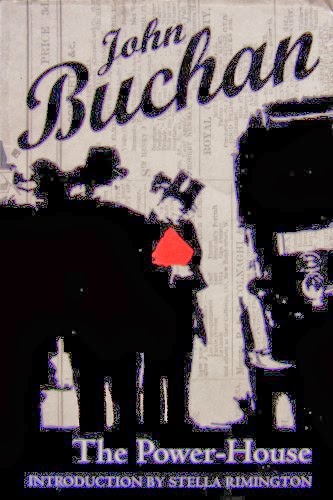
book cover Original Publication Date: 1913

Genre: mystery

Topics: civilization, espionage


Review by heidenkind:

Sir Edward Leithen, barrister and MP, is hunting with his friends in Scotland. After a few drinks, the men folk start trading stories of all the adventures they've had in exotic locales like Spain, Greece, and Jamaica. Then Sir Edward's like, "You guys are so lucky, I never get to go anywhere or do anything. Oh, right, except for that one time I SINGLE-HANDEDLY BROUGHT DOWN A CABAL ORGANIZATION OF ANARCHISTS INTENT ON THE DESTRUCTION OF WESTERN CIVILIZATION."

drop the mic
BOOM, bitches.

I enjoyed The 39 Steps, John Buchan's most well-known novel, and have been planning to dig into more of Buchan's work for awhile now (awesome random thing that has nothing to do with this review: When I first read The 39 Steps I tweeted about how much I liked it, and Buchan's great-grandson tweeted me back out of the blue to say thank you! That's one of the cooler things that's happened to me on Twitter). The problem was I didn't know where to start. Then I ran across The Power House, the first in the Leithen series, on Librivox and decided to give it a try. It wasn't as gripping a read as The 39 Steps, but it was fun.

Sir Edward Leithen is a very different character from Richard Hannay, the hero of The 39 Steps. In fact, it would be fair to say he's almost the polar opposite. Hannay is a dashing, witty rogue and outsider, while Leithen is a steady, conventional member of the British gentry whose life is an unvarying carousel of "flat, chambers, club, flat." Leithen's life would probably make Hannay want to blow his brains out, but Leithen is 100% down with the drudgery. That actually makes sense in the context of the novel, because Leithen represents civilization, with all its boring steadiness and routine. So who better to defend civilization against the Power House and its ominously polite leader, Andrew Lumley?

As a mystery, The Power House reminded me of The Pelican Brief. Leithen gathers clues through random pieces of information in the course of his lawyering that don't seem particularly important, but eventually lead him to a huge conspiracy. Suddenly people are chasing him all over London and trying to kill him! Improbable? Yes. But, in consideration of the two World Wars England was about to face, a lot of the stuff in the book was creepily prescient. I also liked the fact that the major baddie wasn't German, although his ideas are tied to Germans.

The Power House was a good read, although I wouldn't call it unputdownable. It's very short and fast-moving, and once Leithen starts getting into scrapes he takes to danger like a fish to water. Nothing fazes this guy! Not that there are a whole bunch of action scenes; The Power House is more of an intellectual puzzle (Leithen IS really smart) than a spy thriller like The 39 Steps. I think I probably would have prefered it if Leithen started freaking out, but keep calm and all that. I also thought the ending was a bit of a let-down—it seemed like the organization of the Power House collapsed too easily, and everything settled back to normal as if nothing had happened. Which I guess was the goal on Leithen's part, but COME ON DUDE. At least take a vacation or something.

So I can see why The 39 Steps is more well-known than The Power House. But I'd still recommend it to fans of spy novels/thrillers or even Edwardian fiction.


Download The Power House by John Buchan at Gaslight|Librivox

Tuesday, March 11, 2014

Review: I'VE COME TO STAY: A LOVE COMEDY OF BOHEMIA by Mary Heaton Vorse

book cover Original Publication Date: 1918

Genre: romantic comedy

Topics: love, free will, battle of the sexes


Review by heidenkind:

Ambrose is a writer living in Greenwich Village, right on the edge of Washington Square. Despite the fact that he rarely has two pennies to scrape together, he has a fine wardrobe, wonderful friends, and only writes when he feels like it. Ambrose is living the dream, in other words. But when he adopts an orphan named Sonya (or is it the other way around?), Ambrose can sense his glorious life slipping away into one of conventionality and obligation. Will Ambrose be able to hold on to the life he wants while still doing the right thing?

Books like I've Come To Stay are the entire reason I started this blog. This novel is totally obscure and completely delightful, and I can't wait to tell everyone about it! In tone it reminded me of Gigi, or perhaps a 1910s American version of Notting Hill. In other words, I loved the hell out of it.

I've Come To Stay is a unique take on the romantic comedy. First of all, the people that populate it are fun and quirky, as one would expect from a book set in Greenwich Village. I'm a total sucker for stories that capture avant-garde communities and time periods like this, and I've Come To Stay does it perfectly. It's filled with people who've deliberately rejected the idea of being conventional and decided to become dancers, artists, writers, fashion designers, and political dissidents. They're not necessarily ambitious—Ambrose certainly isn't—except when it comes to freedom and self-expression. For instance, Sonya, the orphan who decides Ambrose is going to adopt her, was raised by her grandfather:
...to express her individuality fully. If she feels like catching a ride on a hearse, she does it. Instead of the Bible she has had Nietzsche; instead of the catechism, Max Stimer; instead of geography she was from the cradle taught to dance by a fat, old Italian ballerina...

Another example is Camilla, the woman Ambrose is sweet on. She longs to escape her "horrible blue-serge youth" in the country, and accordingly has no interest in settling down, getting married, or being a mother, especially to Sonya. Will Ambrose be able to convince her that marrying him doesn't mean becoming a boring and conventional hausfrau?

There's a theme of obligation and responsibility running through I've Come To Stay that intersects with a subtly played out battle of the sexes. As Ambrose's Aunt Adelaide tells him, "It's that awful maternal instinct run rampant." Adelaide's theory is that women make men miserable by treating their husbands and boyfriends like children. But men do the same thing to women, as Camilla discovers when she's caught in her own web of obligation.

I wouldn't call I've Come To Stay a strict romance—most of the scenes and storylines have to do with Sonya messing up Ambrose's life, not the relationship between him and Camilla—but it is SO, SO FUNNY. The dialog between Ambrose and Camilla is sharp and clever, and Ambrose himself is droll and completely charming. His interactions with Sonya are also pretty amusing, since she's an insane, tiny drill sergeant ("When I'm one minute late to school I feel as if I had wasted my whole life") who's constantly trying to get him to toe the line.

When I got close to the end of I've Come To Stay, I honestly wasn't sure if Camilla and Ambrose would end up together, and I was more than a little worried they'd both settle down and decide to "grow up" or become normal. This novel could have gone in so many different directions, but the conclusion Mary Heaton Vorse writes is absolutely perfect and delightful.

If you like comedies, romantic or otherwise, I really hope you'll give I've Come To Stay a try. I loved it and predict it will be one of my favorite books of the year. I want to read all of Vorse's other books now!


Download I've Come To Stay: A Love Comedy of Bohemia by Mary Heaton Vorse at Archive.org|Librivox

Tuesday, March 4, 2014

Review: THE POISONED PEN by Arthur B. Reeve

book cover Original Publication Date: 1912

Genre: mystery, short stories

Topics: Detective, technology, corruption, science


Review by heidenkind:


"Professor" Craig Kennedy (what exactly he's a professor of I don't know—his first name might be professor) and his reporter friend/sidekick, Walter Jameson, are on the case of a string of mysterious crimes in this collection of short stories.

Someone on Goodreads described Craig Kennedy as "A poor man's Sherlock Holmes," and that's fair—but isn't that really true of 70% of detective fiction? Kennedy and Jameson are definitely "inspired by" Holmes and Watson; but even if the premise isn't very original, I found the short stories in The Poisoned Pen to be unusual and entertaining.

Admittedly, part of the reason why I liked The Poisoned Pen so much had nothing to do with the book itself, but the narrator of the audiobook version I downloaded, Elliot Miller. He was awesome! He gave all the characters their own voices, including Kennedy, who spoke like an olde-timey movie actor. The fact that Kennedy talked like Cary Grant was something I totally got a kick out of, and Miller was spot-on at reproducing that throwback Mid-Atlantic English accent.

I also really liked how women were treated in The Poisoned Pen. Not that it passes the Bechdel Test or that I would ever describe it as feminist or anything, but the female characters Arthur B. Reeve introduces are well-rounded human beings with their own motivations, NOT stereotypes or tropes (what a concept). For example, in "The Campaign Grafter," there's a suffragette who's sweet, fashionable, and idealistic. In "The Yeggman" (which I guess is a burglar?), one of the suspects is a woman who chews Kennedy out when he accuses her of trying to commit fraud. Instead of dismissing her as "hysterical" or "difficult," Kennedy admits he deserved the ass chewing and apologizes to her. And in "The Firebug," Kennedy solves a crime using handwriting analysis, concluding the writer of a series of letters is a woman. This kind of thing happens all the time in detective novels and on TV shows (I'm looking at you, Sherlock), and it normally pisses me off because it promotes ideas of gender essentialism (she checked her nails a certain way, she must really be a man!). But in The Poisoned Pen, Kennedy takes care to explain that determining gender based on handwriting is only accurate about 80% of the time, and the reason men and women tend to write differently has to do with the types of professions they gravitate toward and the amount of writing they do, NOT anything to do with their gender per se. So okay, Kennedy, I'll give you a pass on that one.

As for the mysteries themselves, some of the solutions in The Poisoned Pen were SO BIZARRE, I can't even. In one, Kennedy concludes the criminal disguised himself by cutting off the tips of his fingers and REGROWING THEM to produce new fingers (and thereby different fingerprints). Totally plausible you guys. In another story, Kennedy brings someone back from the dead. Literally. And then there was an instance where a doctor avoids dying from cyanide poisoning by washing out his stomach with hydrogen peroxide and then injecting said hydrogen peroxide into his bloodstream. LIKE, WHAT?

doctor who what gif


I'm no chemist or anything, but that sounds like it might do more harm than good.

That being said, I found the bizarro plot points more amusing than annoying. It's kind of entertaining how Kennedy uses devices of "the future" that seem very quaint and odd now.

Not that all of the stories are great (the last three are kind of a drag), but for the most part I'd recommend The Poisoned Pen to anyone who enjoys mysteries. And definitely check out Librivox's audiobook version if you're into that sort of thing!


Download The Poisoned Pen by Arthur B. Reeve at Project Gutenberg|Librivox

Tuesday, February 18, 2014

Review: EMMA by Jane Austen

book cover
Proposed alternate title: Mr. Knightley is Always Right

Original Publication Date: 1815

Genre: women's fiction

Topics: marriage, women, coming of age, friendship, class


Review by heidenkind:


The life of young, pretty, clever, and rich Emma Woodhouse is thrown into chaos—or at least discomfort—when her governess and best friend, Miss Taylor, gets married. Lonely, Emma tries to find other friendships in the small town of Highbury, but her managing ways only seem to spread misery, as her neighbor Mr. Knightley delights in pointing out. Will Emma ever be able to settle into a life of happiness, peace, and tranquility?

I actually liked Emma a lot more than I thought I would based on the film and television adaptations I've seen (of which there are an astonishing number, all things considered). In most adaptations, Emma comes across as a spoiled brat. Not to say she isn't, but I found her more sympathetic in the book.

Emma is separated into three parts: Emma vs Harriet Smith, Emma vs Jane Fairfax, and Emma vs Emma. Emma vs Harriet Smith was, quite frankly, REALLY hard to get through. If I hadn't promised Kelly from Reading with Analysis that I would read Emma for Jane Austen January, I probably would have DNF'd it before I got to Part 2. Emma is just SUCH a manipulative bitch. It was so bad I wondered if Jane Austen wasn't making fun of Prince George, whom she hated but was forced to dedicate Emma to (I guess because he asked her to). After all, like Prinny, Emma is the princess of her little village: no other person is her social equal, and that is NOT a benefit for her, personality- or character-wise. Yet everyone inexplicably thinks she's wonderful; and even if they don't, they don't say anything about it. Also like Prinny, Emma's dad is CRAZY. But, I will say this much for her: when Emma realizes she's made a mistake, she owns up to it and apologizes right away. So going into Part 2, I was inclined to think better of her.

emma woodhouse haters to the left


I found Emma vs Jane Fairfax to be more amusing than Part 1. Mostly because I already knew what was going to happen, so I could enjoy the irony. But there was one thing that drove me insane: conversations that went on and on AND ON. Like we get it already! The joke has been made! Let me give you some examples of the fascinating topics under discussion:

The post office. Did you know they ship mail? And the mail often reaches its recipient! It's a wonder of organization, is what it is. Let's discuss this for TEN PAGES.
*silently screaming*<-me

MRS ELTON: Jane, I'm going to find you a governess position.
JANE: No thank you.
REPEAT AD INFINITUM

Gruel! It's a healthy dinner option for anyone who's ill or has completely given up on life. But did you know it shouldn't be too thick? Nor too thin.

In Emma vs Emma, Emma goes into a hate spiral because Harriet tells her Mr. Knightley is in love with her. And since everyone except Knightley has noticed he's a being moody bastard, Emma is inclined to believe her. I do have to admit I found Mr. Knightley pretty attractive and thought he and Emma had great chemistry. That is, at least until the part of the book where Emma gives him Frank Churchill's letter (and people today whine about email forwarding...) and Knightley goes through it line by line, criticizing everything Frank ever did or was wont to do. Because Knightley's not only a good man, a kind man, a beautiful man; he's the most perfect man to have ever walked the earth! At least since Jesus.

mr knightley gif
Look who's talking, buddy.

But enough unnecessary summary. The sculptor Louise Nevelson once said, "Life isn't one straight line. Most of us have to be transplanted, like a tree, before we blossom." And maybe it's because of that quote that I found Emma to be unsuccessful as a coming of age story. There were times when it reminded me of a Georgian version of Seinfeld: nothing changes. Emma's world is very small (though not idyllic—there are robberies and whatnot), and she never expresses even barest hint of a wish to leave or grow beyond it. She doesn't even move into Knightley's house—which is what, a five minute walk away?—after they're married! Emma may not be as wackadoo as her dad, but just like him she doesn't want anything to change, ever, and I would argue that includes herself. Sure, she realizes she's made a few mistakes over the course of the novel, but the ease with which she faces them and moves on makes me doubt she learned anything from them. For example, when she's like, "Mr. Knightley was right, I never should have befriended Harriet Smith!" it's because she thinks Mr. Knightley is in love with Harriet and she wants him for herself, not because she's had some sort inner revelation about how Harriet is significantly less happy now than she was before Emma condescended to notice her. Even in the last part of the novel she's still pretty selfish.

I also found Emma to be a more cynical novel than other Austen novels I've read. In Pride & Prejudice, you really get the sense that even though Darcy and Elizabeth got off on the wrong foot, they come to a true understanding of one another, flaws and all. With Emma, almost the opposite is true: she starts off as a matchmaker, believing she understands the human heart, and ends up thinking that no one can ever really know another human being. But that's cool, since she doesn't really care all that much anyway.

I'm glad I read Emma. It is a well-written book, but I don't think it will ever be my favorite Austen novel. Or even my fourth-favorite.

Incidentally, I listened to the Librivox version of the book narrated by Moira Fogarty, and she did a fantastic job. She gave every character his/her own voice and everything. I highly recommend it!


Download Emma by Jane Austen at Project Gutenberg|Librivox|GirleBooks